
AEO vs GEO: Everyone’s Confused — Here's the Difference
Two new buzzwords. One big shift. Let’s clear up the difference between AEO and GEO, and how they affect your online visibility.
Updated:
Feb 18, 2026
You're not crazy for mixing up AEO and GEO.
These terms gained attention in the digital marketing world around 2023–2024, and exploded in 2025 when AI went mainstream.
As of 2026, over 1 billion people use AI. It's vital to stay in the loop.
So, what's the difference between AEO and GEO?
AEO (answer engine optimization) optimizes your content to provide clear, direct answers that search engines can extract and display.
GEO (generative engine optimization) focuses on getting your website and content cited, referenced, or recommended inside AI-generated responses from tools like ChatGPT, Grok, Gemini, etc.
In the next 10 minutes, I’ll break down AEO and GEO in plain English, give you examples, and (most importantly!) explain how you can leverage them to skyrocket your visibility in AI search.
Key Takeaways
- AEO optimizes for direct answers in featured snippets, AI Overviews, and voice results.
- GEO optimizes for AI citations and recommendations inside tools like ChatGPT and Gemini.
- Both fall under AI optimization that goes over and above traditional SEO.
- Structured, high-intent, conversational content is the driving force behind AEO and GEO.
- Get the basics right: FAQs, schema markup, conversational keywords, fast mobile pages, topic clusters, and a Google Business Profile.
What Is GEO?
Generative engine optimization (GEO) is the process of tailoring your website and content to be easily understood, trusted, and cited by AI-driven search engines like Google's AI Overview, Grok, ChatGPT, and Perplexity.
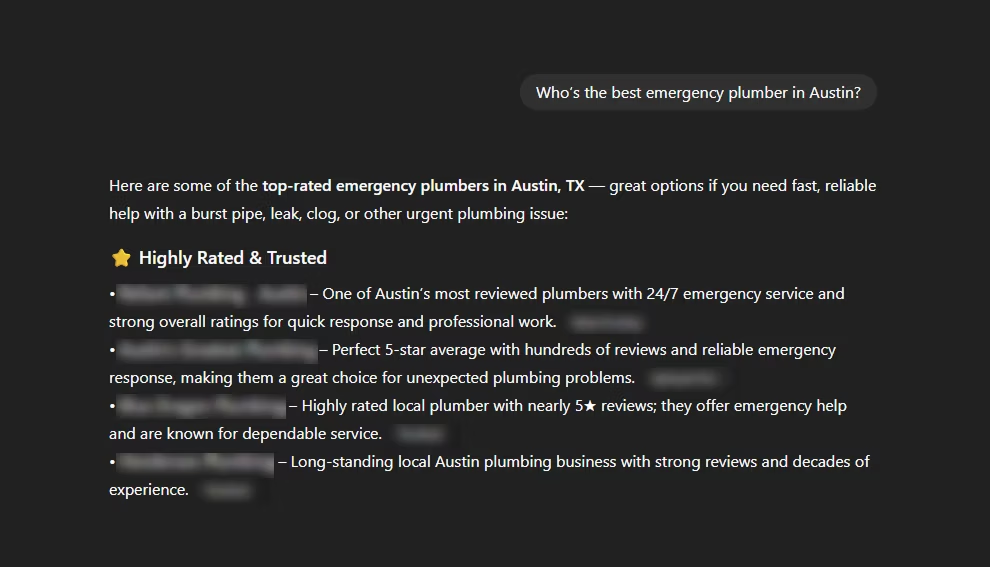
For example, if I ask ChatGPT: “Who’s the best emergency plumber in Austin?”, it generates a summary using information from multiple websites, and cites the businesses it trusts most.
That’s GEO in action.
So, what is GEO vs SEO?
Unlike traditional search result optimization (which focuses on driving clicks via keywords), GEO targets brand visibility within the AI-generated response itself.
And AI visibility is important. ChatGPT hit 100 million users mere months after launching, and it continues to grow like crazy.
GEO is essential for local businesses to stay competitive.
What Is AEO?
Answer engine optimization (AEO) is the practice of structuring your content to get surfaced by AI-powered search tools (like ChatGPT, Grok, and AI Overviews) as a direct, concise answer to a question.
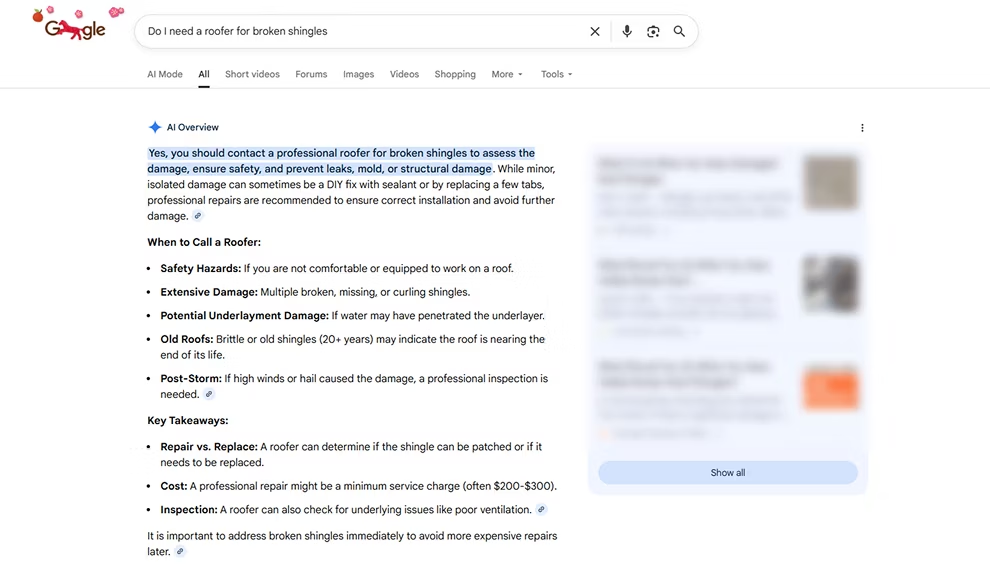
For instance, if I Google, "Do I need a roofer for broken shingles?" Google’s AI reads dozens of web pages at once (blogs, contractor sites, FAQs, forums, guides), and pieces together an answer.
That's AEO in action.
According to a study by Marketing LTB, 50% of searches are now question-based.
In simple terms, the meaning of AEO in marketing is this: instead of optimizing for rankings on page one with SEO, you optimize for featured snippets, “People Also Ask” boxes, voice search responses, and Google AI Overviews.
Traditional SEO focuses on keywords and click-through rates. AEO focuses on clarity, structure, and concise responses that AI systems can extract.
Need a deeper breakdown? Check out my full guide on answer engine optimization.
Core Differences Between GEO and AEO
So, AEO and GEO are pretty much the same thing, right?
Not quite! AEO and GEO both help your content show up in AI-powered search.
The main difference: AEO targets quick, direct answers, while GEO builds deeper authority so AI can summarize and cite your content.
At their core, GEO and AEO are both forms of AI optimization.
Remember it like this: GEO focuses on overall visibility inside generative AI systems, whereas AEO targets direct-answer placements like featured snippets and voice responses.
Hopefully that makes sense!
GEO vs AEO: Two Names, Same Goal?
The GEO and the AEO acronyms might sound different, but they're both about getting your content surfaced by AI-powered search.
The main difference between AEO and GEO is framing. AEO focuses on optimizing for direct answers, while GEO zooms out to visibility across AI platforms.
Let's break down where these terms overlap:
1. Audience Perception and Branding
Search is quickly moving from 'Listings' to 'Answers.'
I read an article on Gartner, which said: Search traffic from Google is expected to drop 25% in 2026 as users shift toward AI-powered answers.
Showing up in AI results is the new 'Page 1' of Google search.
- Instant Authority: When an AI cites your business as the "best" or "most reliable" for a specific task (e.g., "tankless water heater repair"), it makes you more credible in people's eyes.
- Subconscious Recall: Even in "zero-click" scenarios where users don't visit your site, seeing your brand name cited builds brand recall (60% of searches now end with zero clicks).
- Perceived Modernity: Companies featured in AI Overviews or voice assistant responses are perceived as tech-forward and responsive. Great for younger buyers!
With generative AI platforms like ChatGPT, Claude, Gemini, and Perplexity AI, the branding game has evolved.
Answer engine optimization and generative engine optimization are now essential in your marketing plan.
2. Boosting Market Appeal with Unique Terminology
Data from Pew Research shows that AI Overviews now appear for over 18% of search queries (and it's growing fast!).
This is a watershed moment. AEO and GEO are the new positioning tools to boost your visibility and brand appeal.
- Capture Demand: I see AEO and GEO as the primary tools for differentiation. In a crowded home services market, they build appeal earlier — attracting clients while your competitors rely on outdated SEO.
IBM points out, "AI systems quickly adapt to market changes and disruptions, which can help businesses stay competitive and respond effectively to shifting demand."
- Strategic Brand Positioning: AEO helps you win high-intent queries (“how much,” “best,” “near me”), while GEO strengthens visibility inside generative AI responses. Together, they position your brand as the undisputed authority.
- Enhanced Influence: This attracts ready-to-buy prospects who use AI, improves visibility across AI-driven platforms, and builds long-term authority.
Not-so-fun fact: 70% of people won't even scroll past the first 1/3 of an AI answer. It's not enough to be one of the top answers. You must be THE top answer.
That's how high the stakes are in your AI digital strategy. AI search creates a 'winner-take-all' dynamic for the top spot.
3. Distinct Approaches to Optimization
AEO and GEO are like two sides of the same coin, with a few differences...
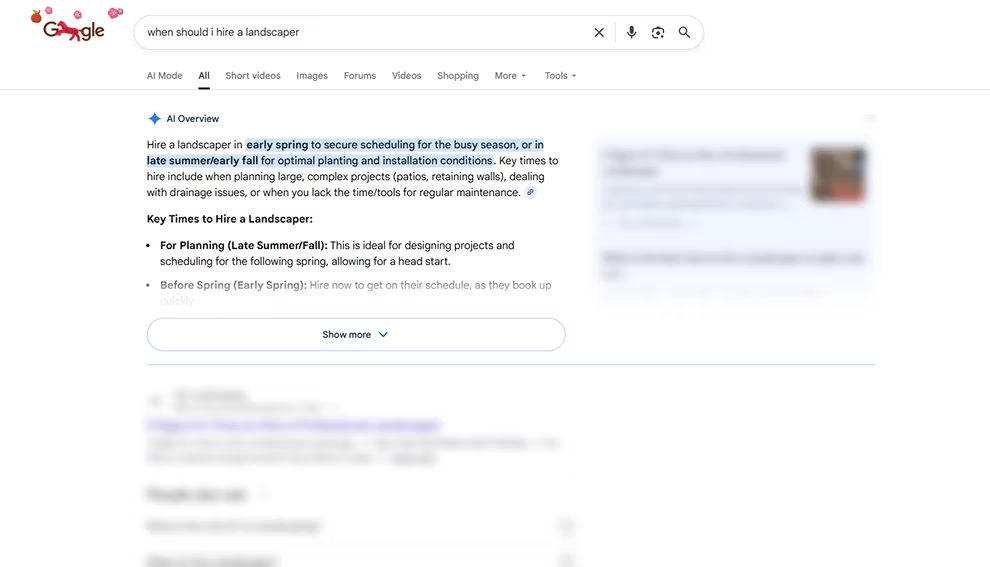
- Diverse Methodologies: AEO is the "Quick Answer" expert, using structured data (like FAQ code) to give AI the facts fast.
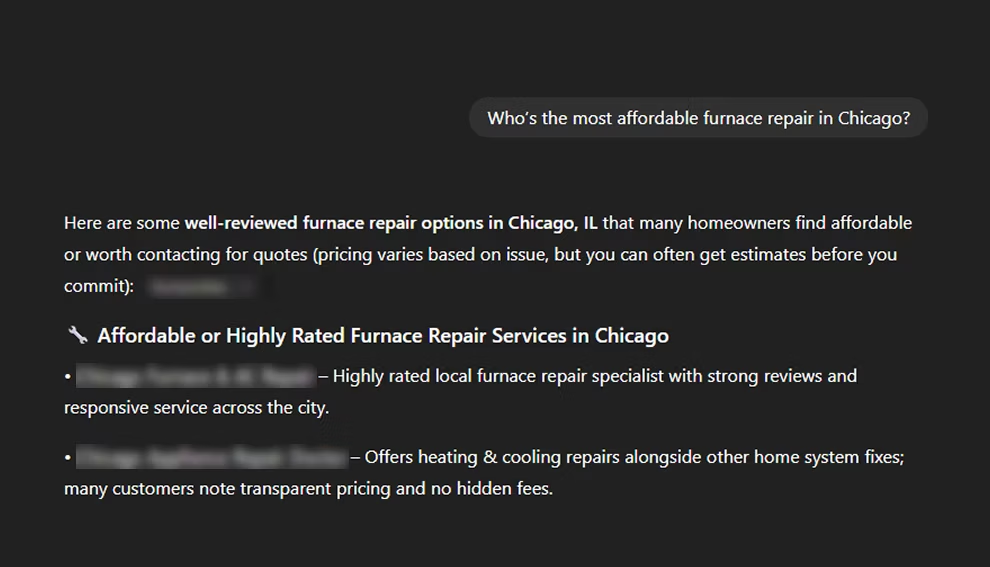
GEO aims at conversational search (like ChatGPT), helping AI recommend you when a user asks questions like, "Who’s the most affordable furnace repair in Chicago?"
- The Shared Core: Despite different "vibes," the heart of AEO and GEO stays the same: both prioritize clarity, accuracy, and user intent.
- Machine-First Structure: Organize your content so AI systems can easily read, understand, and extract it; whether that’s through clear site structure, schema, or concise conversational answers.
AI has HUGE potential to boost your lead flow! Check out my roundup of the top 15 AI tools of 2026.
4. It Doesn’t End With Just These Two Terms
The AEO vs GEO conversation is only just the beginning!
With AI-driven search tools, you’ll also hear emerging terms like:
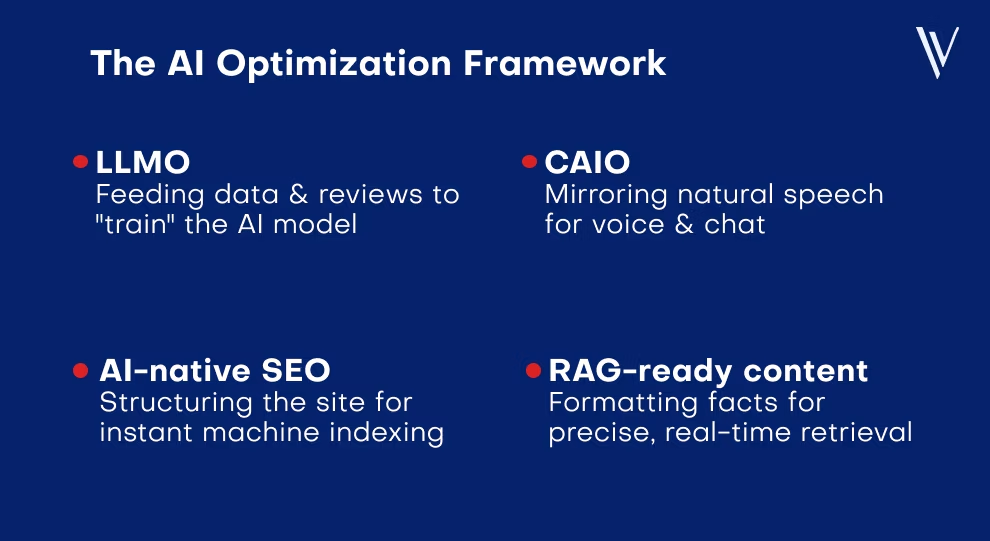
- LLMO (Large Language Model Optimization) - Feeding AI models the specific data and reviews needed to "train" them that your business is the local authority.
- CAIO (Conversational AI Optimization) - Mirroring natural speech patterns to ensure your brand is the one recommended during voice searches and chatbot conversations.
- AI-native SEO - Building your website structure to prioritize machine-readability so AI "spiders" can index your expertise instantly.
- RAG-ready content - Formatting technical data (like service areas or pricing) so AI can "retrieve" it to provide precise, live answers to users.
Don't panic. These are all focused on making content easier for AI systems to understand, retrieve, and surface.
They all reflect the same shift: optimizing for AI-driven ecosystems and user experiences.
AEO vs GEO: How to Optimize for AI Algorithms
Gartner predicts: By 2028, organic search traffic will decrease by 50% or more as consumers embrace generative AI-powered search."
It's time to get on board!
Generative engine optimization vs answer engine optimization is not the real question.
You need BOTH in your AI business strategy. Together, they determine whether you get cited (or skipped) by today’s AI engines.
Here are my top 8 tips to fine-tune for AEO and GEO in 2026.
1. Optimize Content for AI Understanding
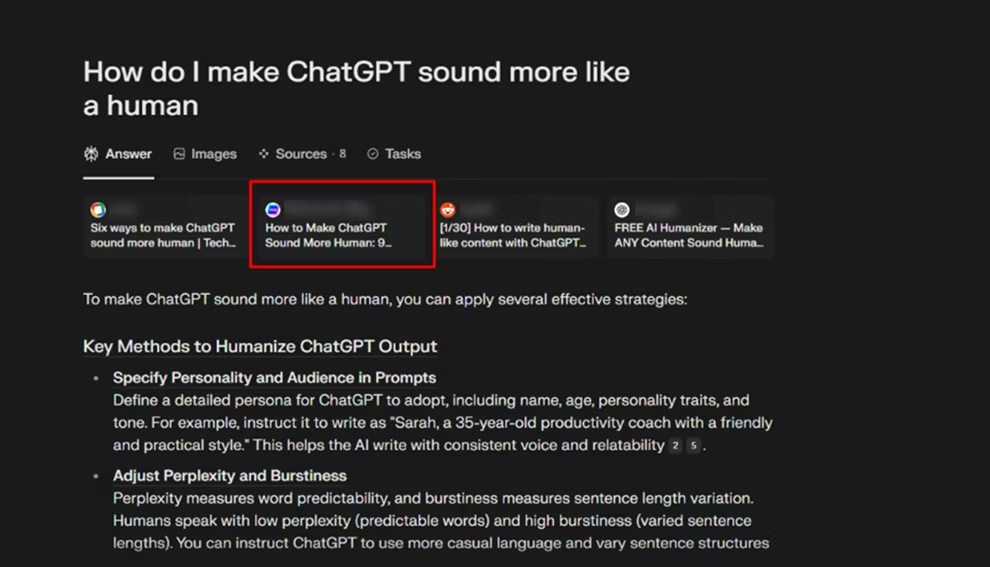
Write like you're talking to a neighbor.
Today’s AI engines use natural language processing (NLP) to understand the meaning, context, and intent.
So, remember this: AEO marketing starts with clarity. If your content is confusing or bloated, AI won’t know what to surface.
Here’s what my team does to make our content AI-friendly:
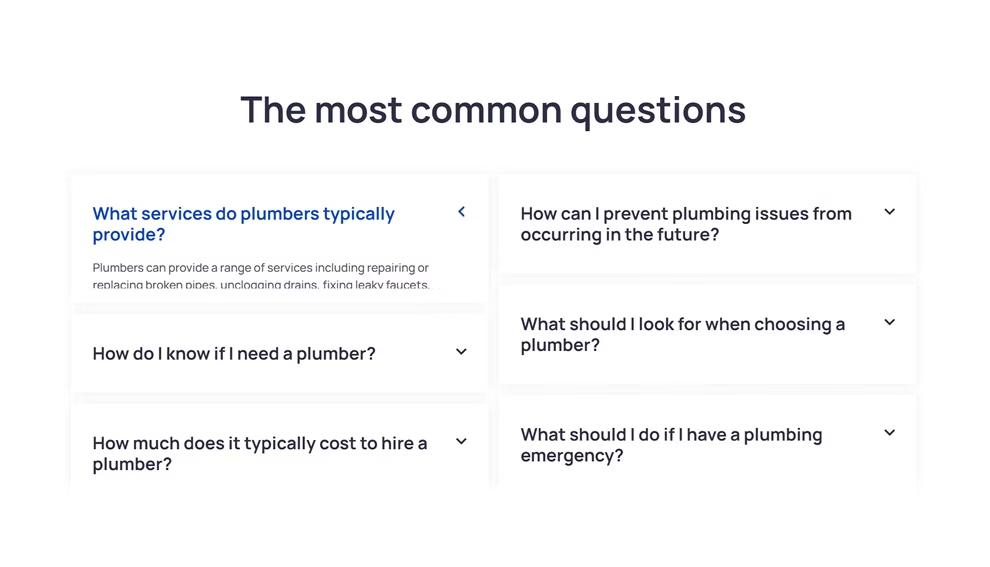
- Open sections with short, direct answers (1-2 lines max).
MJP Chicago does a fantastic job with their plumbing FAQ page:
- Write the way people talk in simple sentences.
- Keep each section focused on one clear idea.
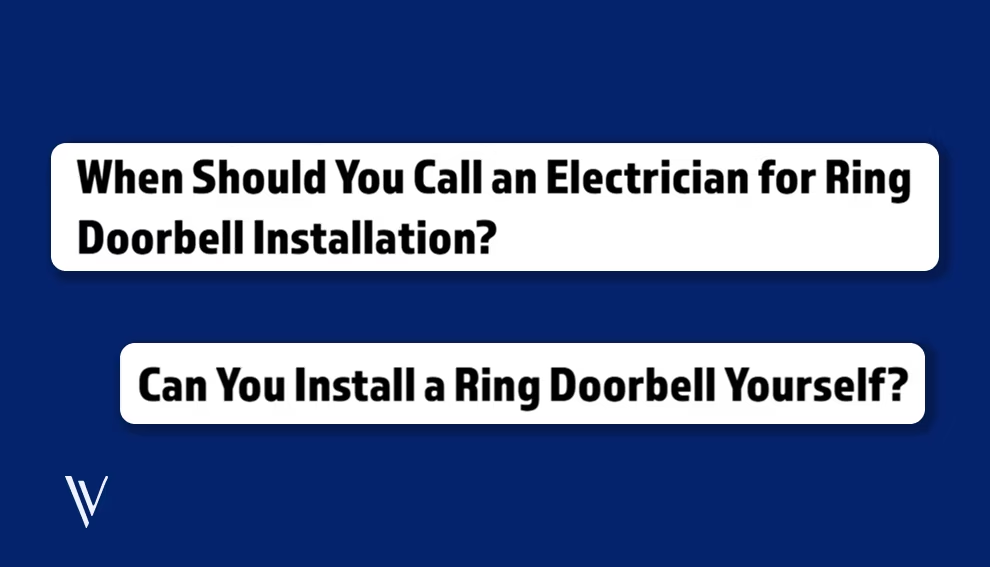
- Use headings that sound like real questions
Knightly Electrical Services crushes this on their blog. Their headings are the exact questions users ask, and they have an FAQ section at the end!
- Add keywords and maintain keyword relevance, but only where it feels natural.
- Structure content so every paragraph can stand alone.
Example of a bad paragraph
Voice search is changing how people find contractors. Because of this, businesses need to update their SEO strategies. This also impacts how FAQs are written.
Example of a good paragraph that stands alone
Voice search is changing how people find contractors. More users now ask full questions instead of typing short keywords.
Need a deeper breakdown? Read my step-by-step guide on how to create AI-optimized content.
2. Identify and Integrate Conversational Keywords
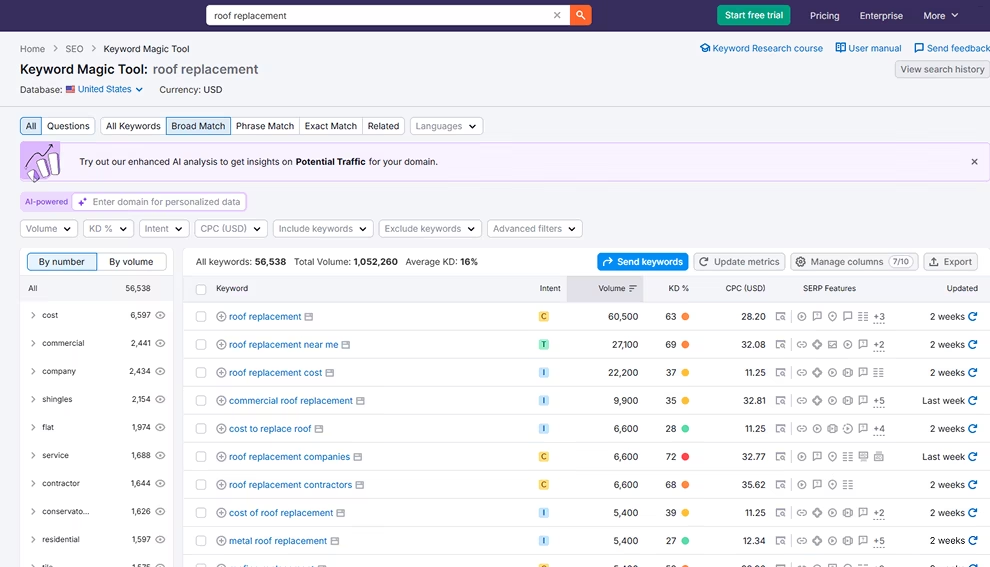
With AEO and GEO, don’t use stiff keywords like "furnace cost in Chicago."
I can't say this enough: you need conversational keywords. AI engines favor this kind of language because it mirrors real questions:
- Turn headings into real questions users ask: swap “Roofing Services Chicago” for “How long does a roof replacement take in Chicago?” (voice searches grew 270% in the last 2 years, driven by question-style queries).
- Answer questions in the first sentence: CD Roofing executed this brilliantly.

- Sprinkle conversational phrases into body copy: Include phrases like “best emergency plumber near me” or “how fast can I get AC repair today."
- Use semantically related terms, synonyms, and variations like same-day AC repair, emergency AI fix, broken AC repair and replacement.
- Map each keyword to user intent: Informational (“What causes pipe leaks?”), local (“plumber open now in Austin”), or transactional (“book same-day drain cleaning”).
- Informational queries belong on blog posts or FAQ pages. Local queries (“plumber open now in Austin”) should live on service pages.
Abacus Plumbing has brilliant service pages (Plumbing, AC & Heating, etc) with emergency-focused messaging.
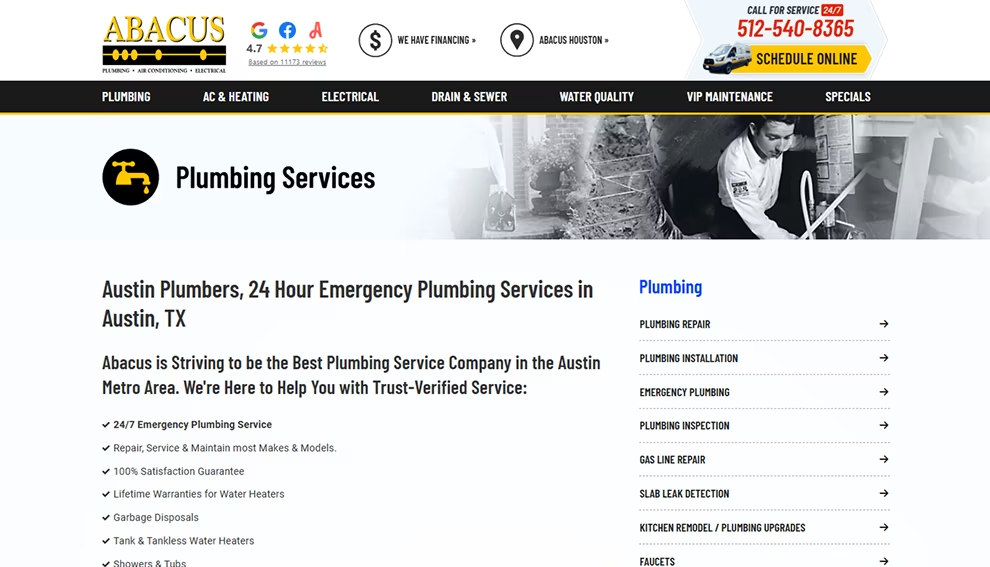
Follow this, and AI-driven searches are far more likely to surface your brand!
3. Leverage Structured Data and Schema Markup
Structured data (or schema markup) is code added to your website to help AI search engines understand what your content means (services, FAQs, reviews, locations).
This is where AEO marketing gets technical... so stick with me.
It makes your pages eligible for featured snippets, AI answers, and rich snippets (star ratings, FAQs, pricing, images, or business details) on Google.
Here's the main schema we use for clients:
- LocalBusiness schema (name, address, hours, service area)
- Service schema (specific offerings like "drain cleaning" or "AC repair")
- FAQ schema (perfect for voice search and AEO answers)
- Review schema (pulls ratings directly into search results)
And by the way, only 67% of websites optimize for structured data. This is a gentle nudge to use it and optimize for AI engines!
Pro Tip: Yoast SEO is a wonderful WordPress plugin that automatically adds schema for FAQs, articles, breadcrumbs, and more. I highly recommend this if your site is on WordPress.
To learn how this exact schema strategy drives massive traffic for outdoor companies, dive into my guide on SEO for landscapers.
4. Optimize Metadata for AI Visibility
Metadata is the behind-the-scenes information that tells search engines what your page is about, mainly through title tags and meta descriptions that appear in search results.
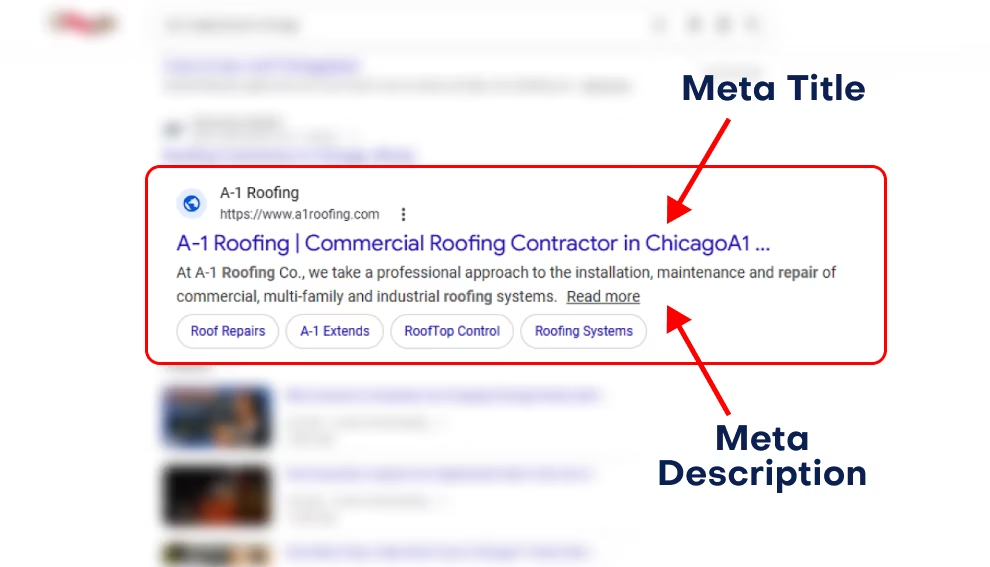
Canada Create points out that Google does rewrite your metadara 63% of the time.
However, in the context of GEO vs AEO, write your metadata anyway! It helps AI-driven search engines quickly understand your content’s purpose and relevance.
To optimize your metadata:
- Keep title tags under ~60 characters and focus on one core topic
- Write meta descriptions around 120 - 155 characters in plain English
- Include primary keywords like "Best Roofing Company Chicago."
- Treat every description like a mini-FAQ; give an immediate answer. AI is more likely to prioritize you.
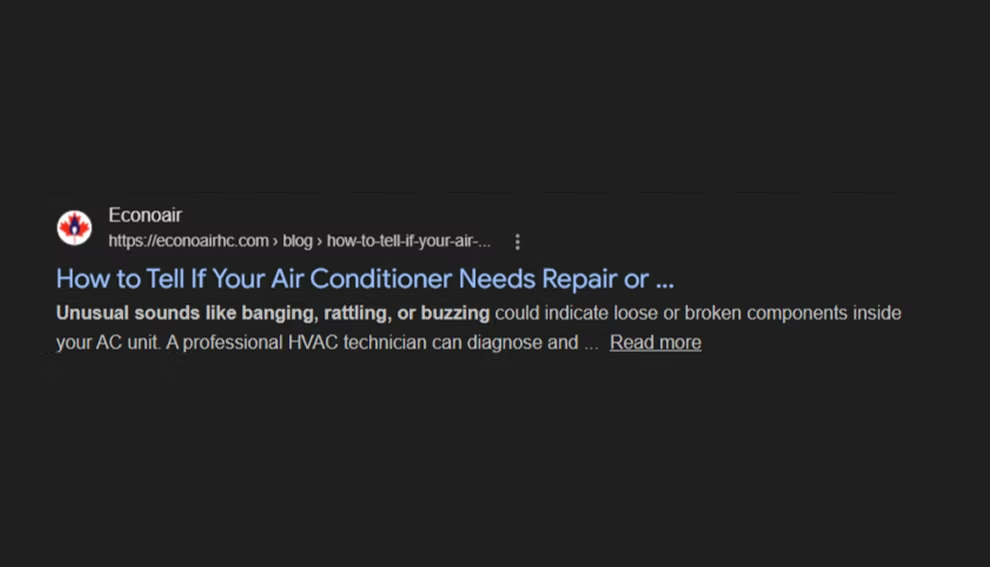
Econair is a great example of a meta description. It answers the main question by calling out the warning signs that indicate you need an AC repair.
Discover how to get AI to recommend your business! This article is a must-read.
5. Strengthen Source Credibility and Link Signals
Is your website trustworthy to AI search engines?
AI cares about E-E-A-T (Experience, Expertise, Authoritativeness, Trustworthiness). This tells AI that your content was written or approved by real experts.
A great way to boost your E-E-A-T is through backlinks. These are links from other websites pointing to yours.
Search Engine Land found: The websites in Google’s top 10 results typically have over 1,000 backlinks from unique domains.
To build stronger credibility with your AEO and GEO:
- Earn links from local news outlets, industry-specific blogs, and respected trade publications.
- Publish original content like repair guides backed by client case studies. You'll create "linkable assets."
- Ensure every piece of content features detailed author bios and professional credentials. Hey, I did it for this article!

- Maintain a schedule to regularly update existing content with fresh data. This prevents "link rot" and signals to AI search engines that your information is current.
Important Tip: Avoid link farms, spam directories, and low-quality guest posts. AI engines can spot artificial link patterns easily.
Build real authority and earn high-quality backlinks for exterior contractors with my proven strategies for siding marketing.
6. Boost Speed and Ensure Mobile Optimization
In AEO vs GEO, one thing is constant: page speed and mobile optimization.
This directly impacts whether AI-driven search engines extract your content.
52% of global web traffic comes via a mobile device, with 40% of visitors leaving a site if it takes longer than 3 seconds to load.
Fast-loading, mobile-friendly websites deliver a far better user experience, and AI engines prioritize those pages!
How do you ensure page speed and mobile optimization?
- Compress images and stick to WebP formats under 200KB.
- Remove unused scripts and plugins that slow down your "Time to Interactive" (a key ranking factor, and something AI cares about, too).
- Enable caching and use LiteSpeed servers to deliver your site's data to the user quickly.
- Use "thumb-friendly" navigation with large buttons and readable text for customers in a hurry.
- Test pages regularly in Google PageSpeed Insights to catch and fix layout shifts before they hurt your visibility.
Restoration Canada has a fantastic mobile site with sticky contact buttons and very clean, easy-to-read text as you scroll. AI loves these types of sites!
7. Create Semantic Topic Clusters for Better Relevance
AI does NOT evaluate pages in isolation. It evaluates relationships between pages.
Build semantic topic clusters. These organize your content around one core “pillar” page supported by clusters (related subpages).
Towards Data Science called this the "Death of the Everything Prompt." It explains: "You cannot simply prompt a standard chat model to 'do deep research.'"
AI tools scan hundreds of pages and synthesize an answer.
This is precisely why pillar-cluster content is so effective. In AEO marketing, this structure makes it easier for search engines to connect answers to broader topics.
How to implement the pillar-cluster content model:
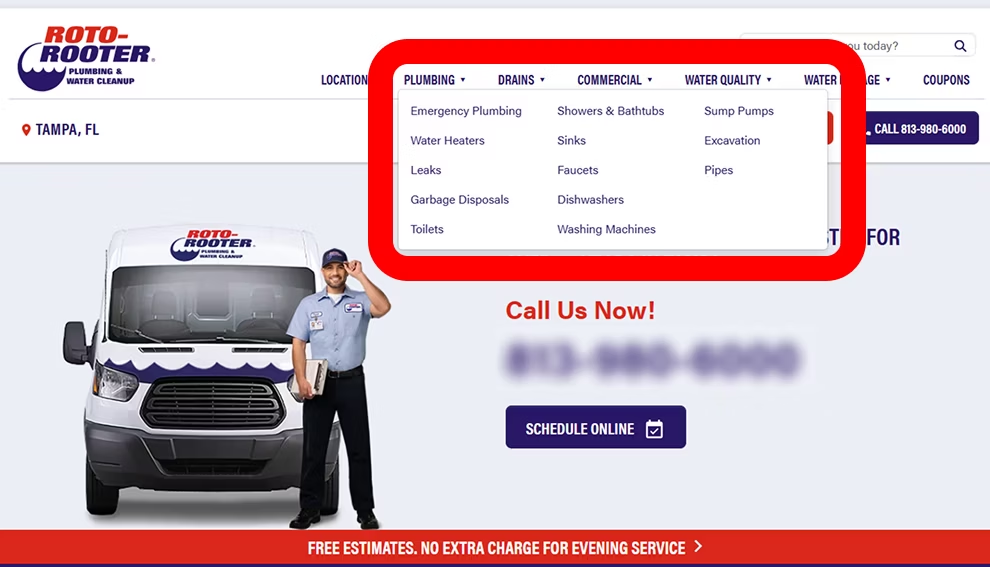
- Service Pillar Pages: Create one comprehensive "pillar page" for each core service (e.g., Emergency Plumbing) to act as your primary authority hub.
- Cluster Content: Build out "cluster pages" that answer highly specific, long-tail questions related to your main pillar (e.g., "How to shut off a burst pipe").
Roto-Roofer nails the pillar-cluster model with key service pages like "Plumbing" linked to individual cluster pages like Water Heaters, Dishwashers, Pipes, etc.
- Semantic Internal Linking: Use descriptive anchor text ("water heater repair" instead of "click here") to link clusters back to your pillar, creating a "web of relevance" that AI spiders can follow.
- URL & Header Hierarchy: Maintain a clean, logical URL structure and consistent H1/H2 tagging so machines can pinpoint what you're trying to convey.
Remember, AI engines will struggle to understand the context, depth, and relevance of your site if you use content silos. Start using the pillar-cluster model today.
Learn how to turn this cluster strategy into targeted traffic for heating and cooling companies with my complete guide to HVAC content marketing.
8. Optimize Your Google Business Profile for AI
A Google Business Profile is a free tool that lets you manage how your business appears in Google Search and Maps. It shows things like your business name, address, phone number, hours, services, photos, and reviews.
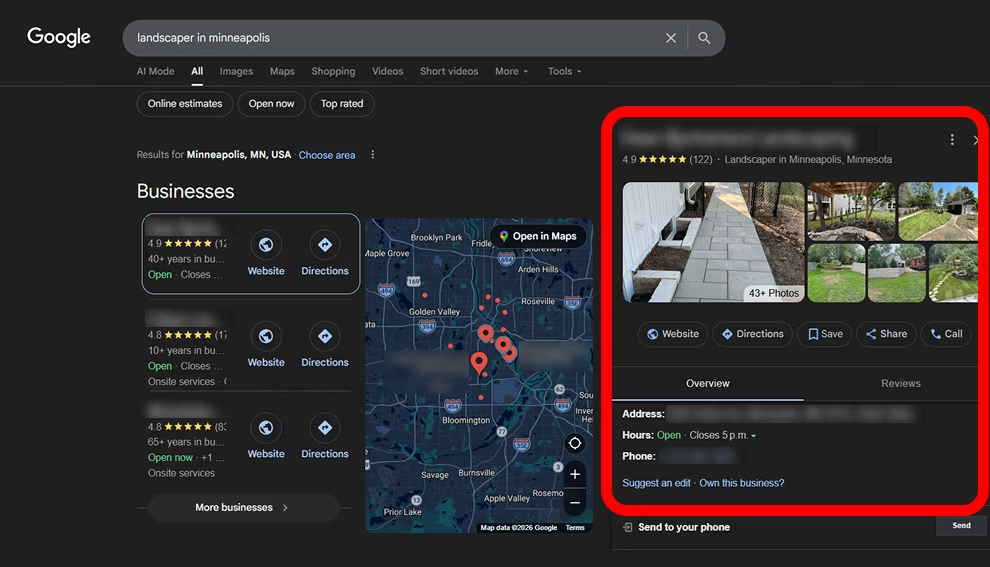
This is one of your most powerful online assets. Your GBP plays a major role in answer engine optimization, especially for “near me” searches like "roofer near me."
BizIQ confirms: "AI relies heavily on your Google Business Profile to ground its claims. If your profile explicitly states you have outdoor seating, the AI can confidently include that in its summary."
How to optimize your Google Business Profile for AI:
- Audit your Name, Address, and Phone for 100% accuracy to avoid "trust red flags" from AI.
- Match your Primary Category to your top service to help AI classify your expertise instantly.
- Use real team and job photos; AI algorithms now deprioritize and filter out generic stock images.
- Integrate your primary city into your business bio to anchor your brand in local AI results.
- Build review velocity by collecting reviews (at least 10 a month) to signal active availability.
Pro Tip: You can also use AI to help draft descriptions, FAQs, and posts! I highly recommend using this.
Need a deeper dive on improving your online visibility? See how to get ranked on Google.
Final Thoughts: How to Book Highly Profitable Jobs with AEO and GEO
When it comes to AEO vs GEO:
AEO helps you get cited in direct answers, while GEO helps your content get cited and summarized by AI search engines.
But here’s the catch: optimizing for AEO, GEO, and AI search engines is HARD.
This goes far beyond following the tips in this article. It takes 10+ years of SEO experience, technical expertise, and a deep understanding of the latest AI tools (which are fast-evolving).
Partner with my team at Comrade. Since 2008, we've successfully grown 100+ home services businesses in major metros. One of our clients, Built to Last Roofing, saw 750% more qualified leads with our SEO, GEO, PPC, and web design.
Don't fall victim to slower weeks.
Protect your pipeline today. Book Your Free Consultation.
FAQ
.png)
Ivan Vislavskiy is a business growth expert with 18 years of experience. He is also CEO of the award-winning Comrade Digital Marketing. Alongside his team, he’s transformed 300+ businesses across the U.S., with a special focus on the home services niche. His approach is ROI-driven, fully transparent, and built to drive real-world business outcomes.
Schedule a session and skyrocket your business today.

![GEO vs SEO: How to Double Your Profits in 2026 [Small Business Edition]](https://cdn.prod.website-files.com/673af32f3d0a33dd056406ce/693a63b8be62ea9d6e9bb15a_geo-vs-seo.avif)

.svg)