
Voice Search Optimization: 10 Tips to Unlock a Brand-New Source of Leads
"Hey Google, what’s the best voice search optimization guide?" You just found it! Borrow my 10-step guide to book profitable jobs, week after week.
Updated:
Feb 17, 2026
“Hey Siri, find me an AC repair guy who can come today.”
“Alexa, how much does it cost to remodel a kitchen?”
Welcome to the new reality of search! A recent study on Marketing LTB found that 71% of users prefer speaking their searches instead of typing them.
For small businesses, that’s a massive opportunity. Voice search is quickly opening the door to new clients, if — and this is a big IF — your site is ready for it.
That's why we need to talk about VSO.
Voice search optimization (VSO) is the practice of fine-tuning your website to surface in spoken, conversational queries on voice search assistants like Siri, Alexa, and Google Assistant.
Today, I'll give you my top 10 highly effective voice search SEO tactics (implemented by my team across 100+ businesses).
You'll see how to significantly boost your visibility and leads by optimizing for voice search queries. Keep scrolling.
Key Takeaways
- Voice SEO is intent-driven: Optimize for questions (who/what/where/how) to get clients.
- Voice search favors featured snippets: Use direct 40–60 word answers.
- Local optimization is a must: Prioritize your Google Business Profile, reviews, and city-based pages.
- Mobile speed is vital: Pages in voice results load ~50% faster than average pages.
- Track voice signals: Monitor long-tail questions, snippets, local rankings, and mobile traffic.
What Is Voice Search Optimization?
Voice search engine optimization is the process of structuring your website's content to show up for conversational-style queries that are spoken to digital voice assistants.
These FAQ-style queries make up 70% of voice searches.
To be featured, your content must be clear, concise, and answer questions directly.
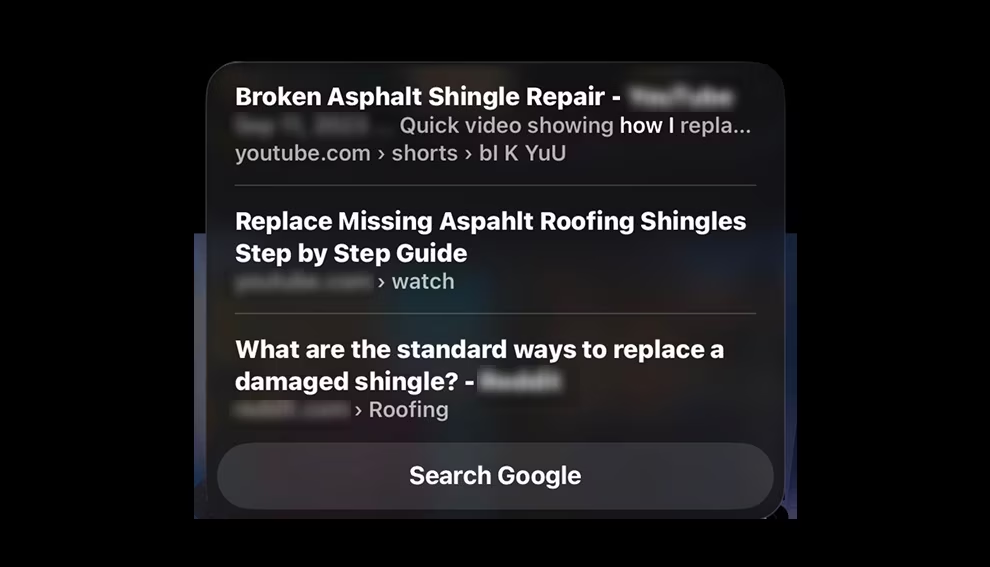
For instance, I just asked Siri, "How do I repair damaged shingles on my roof?"
Siri converted my voice into text, scanned trusted sources across the web, and surfaced YouTube and Reddit as the most direct, relevant answers.
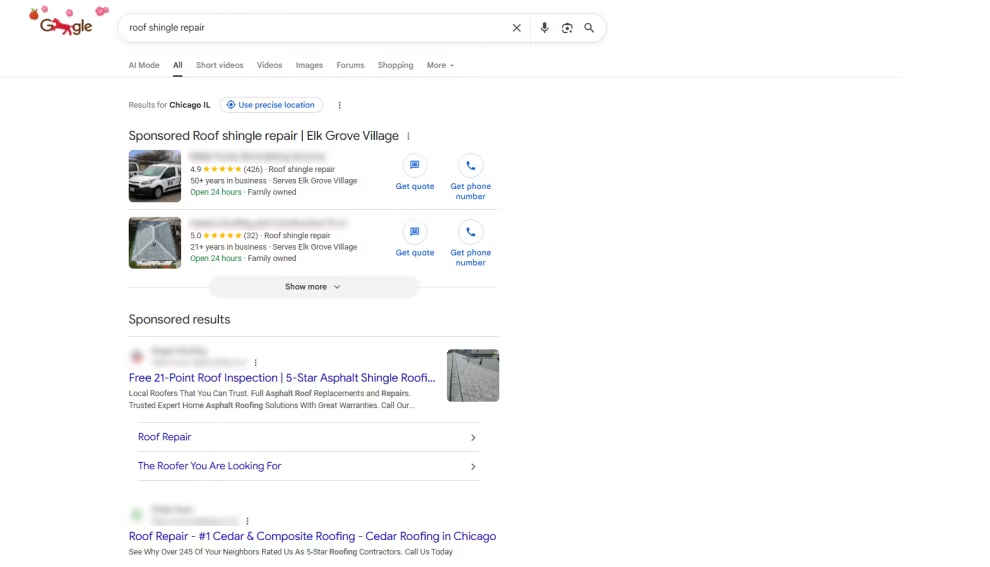
On Google, I would have typed in "roof shingle repair." This would have given me a full page of results.
Unlike traditional SEO, voice search focuses on full questions, natural language (the way two people might have a conversation!), and intent — whether local, informational, or ready-to-buy.
It's also great for accessibility. Outer Box points out: "Voice search provides better accessibility to Internet browsing for older users and those with disabilities or limitations such as arthritis."
But does voice search yield REAL-WORLD business results?
My team has been studying voice search as part of our broader SEO and local marketing systems for 3+ years.
I can confirm: It definitely helps contribute to our average of 400%+ more qualified leads generated when incorporated into our local SEO strategies!
The Importance of Voice Search Optimization in SEO
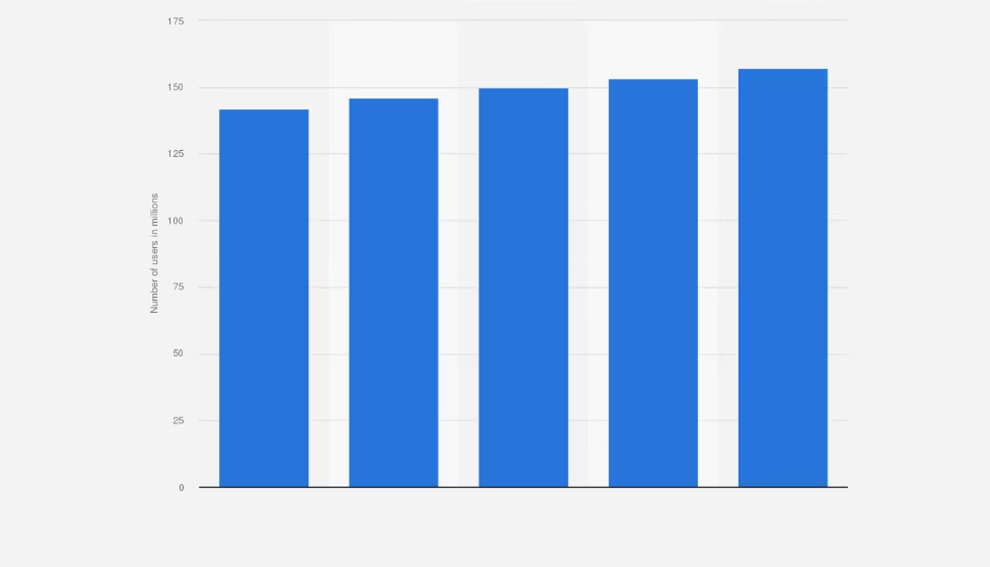
Remember 2008? SEO changed the client attraction game.
Voice search is having a similar moment in 2026.
Prospects are no longer just Googling "roofer near me." 46% of users now use voice search to find local businesses.
They’re asking full questions while driving, cooking, and on the go! And they expect instant answers.
This is why voice search MUST be baked into your local SEO:
- People are asking vs typing. About 1 in 5 adults now use voice search daily, and that number is rising fast.
- Voice searches have high-intent. A large share of voice queries include phrases like “near me,” “best,” or “who can,” signaling someone ready to hire.
- Mobile search dominates voice behavior. 27%+ of voice searches happen on phones, which ties voice visibility directly to mobile SEO.
- Voice assistants usually pick ONE answer. Unlike Google’s 10 blue links, voice search often returns a single recommendation. High stakes!
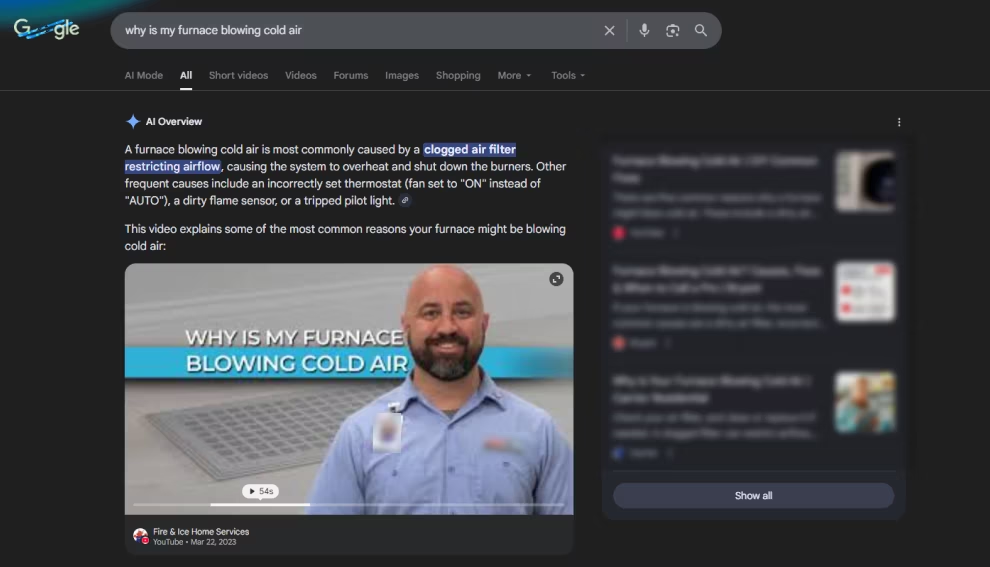
- Featured snippets. Google puts voice answers into its AI Overview at the top of the page. 50%+ of queries now trigger AI Overviews.
- Local SEO gets amplified. Voice assistants rely heavily on location data, business listings, reviews, and proximity.
I see this all the time across the 140+ contracting businesses we've worked with.
Every company optimizing for voice search also shows up for local Google search results and (a lot of the time) AI answers.
But no, voice search does not replace SEO. It amplifies it!
To quote SEO legend, Neil Patel, "Voice search optimization is a subset of SEO."
When you combine voice optimization with strong SEO, local visibility, and high-converting content, you start to increase marketing ROI.
Get More Voice Search Leads!
This is a HUGE avenue of jobs. Partner with my team today. We've raised qualified leads by 400% on avg. in the first 12 months using voice search, SEO, and PPC.

How Does Voice Search Optimization Work?
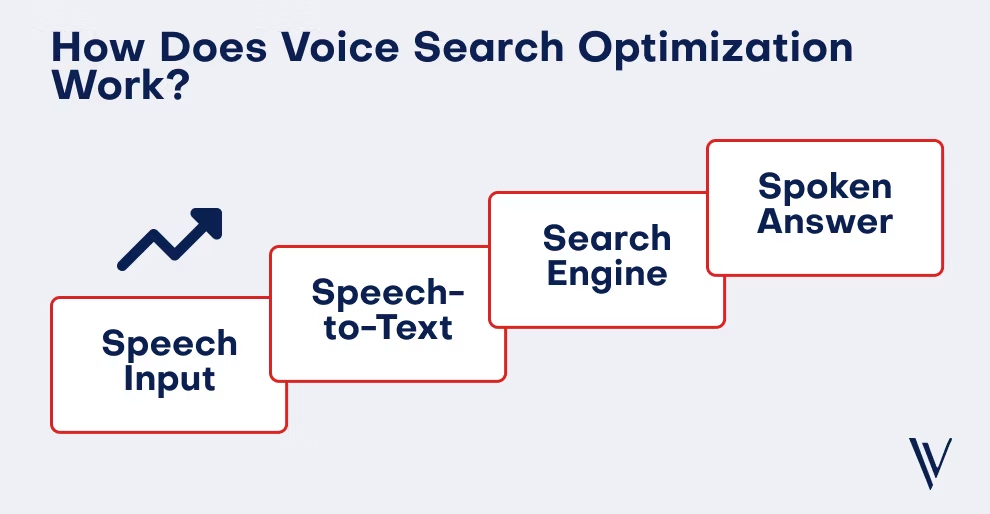
Here’s the simple version of how voice search engines work:
- Speech to text. The assistant first converts the spoken request into written text using speech recognition.
- Intent detection. It analyzes the sentence to understand what you actually want (a local business, pricing, directions, etc.).
- Entity and location matching. It identifies key entities (service type, city, brand names) and adds location context if the query has local intent.
- Search engine retrieval. That text query is sent to its search engine, which pulls from indexed websites, Google Business Profiles, reviews, structured data, and trusted directories.
- Answer selection. Instead of showing 10 blue links, the system selects one primary answer (often from featured snippets or local listings).
- Spoken response. That answer is read back to the user.
All this happens in a matter of 3 to 5 seconds!
In case you were wondering: here are the major voice assistants (and where they typically pull results from):
- Google Assistant → Google Search
- Siri → Google (for web answers) and Apple/Maps signals, depending on the query
- Alexa → Often Bing for web results (plus Amazon’s own data sources)
This is why local SEO is so vital. My advice: think beyond one platform (Google and Bing), especially if you want maximum coverage in voice results.
With that said, let's get to how to optimize for voice searches.
10 Impactful Voice SEO Tips to Show Up in Voice Searches
Voice search plays by different rules.
As previously mentioned, voice queries are more conversational, longer, and question-based.
While traditional SEO might target something like “roof repair Dallas," voice search focuses on natural phrases like: “Hey Google, who can fix a leaking roof near me today?”
To nail down voice search, follow these 10 key voice SEO tactics:
1. Analyze Voice Search User Intent
This is where most businesses mess up.
Early on, I learned that voice SEO isn’t about keywords. It’s about user intent.
People speak in full questions (“who,” “what,” “how”). This means voice searches are longer, more conversational, and usually tied to an immediate need.
There are 4 main types of voice search intent:
- Informational: “How much does a roof replacement cost?”
- Navigational: “Call ABC Roofing.”
- Transactional: “Book an HVAC repair near me.”
- Local: “Who’s the best plumber in Austin?”
Search Engine Land reports that 80% of searches are informational, while 20% are navigational or transactional.
Even though informational searches don’t convert right away, they warm up buyers and lead to jobs later on.
2. Research Conversational Keywords
What is the foundation of SEO for voice search?
Mirror how real customers speak. That is one of the MOST important things I could say to you today.
These voice search keywords typically fall into 3 categories:
- Long-tail keywords: Very specific search phrases that usually have lower volume but higher intent.
Example: “Same-day affordable roof repair in Chicago." - Question keywords: Searches that start with words like “how,” “what,” “when,” “where,” or “why.”
Example: “How much does roof replacement cost?” - Conversational keywords: Natural, spoken-style phrases that sound like how someone would talk. Example: “I need an electrician who can come out this afternoon.”
How do you find these queries? I personally love AlsoAsked.
It lets you plug in a keyword and location (like “roof repair + New York City”), then pulls live Google question data in about 2 minutes, showing you how it branches out.
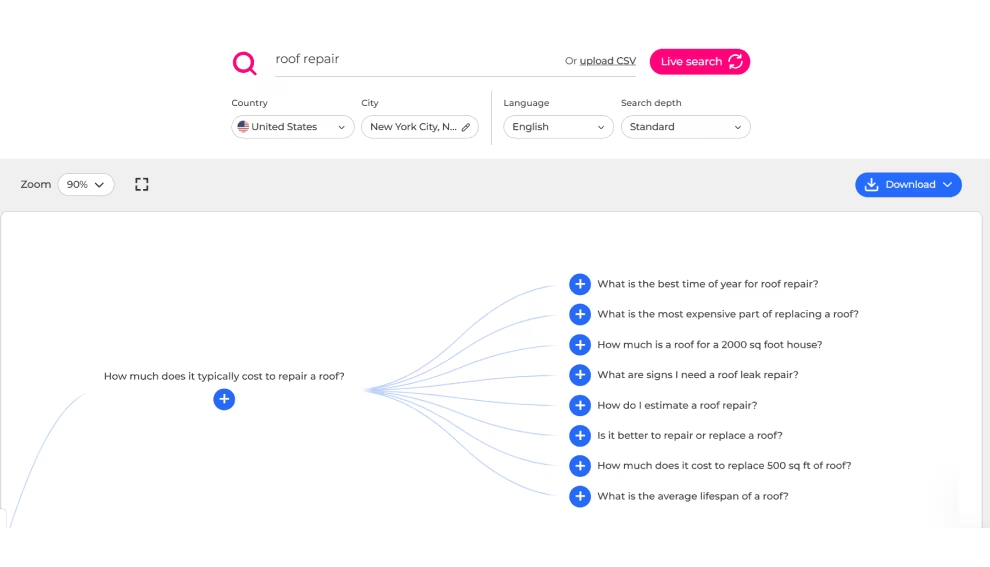
This is a great way to begin your voice search keyword research.
Once you collect these voice search keywords, build simple FAQ sections and service pages that answer them directly.
Home Town HC did a fantastic job with this. Their FAQ page is organized by intent (general, furnace, AC, indoor air quality, financing), and answers each Q directly.
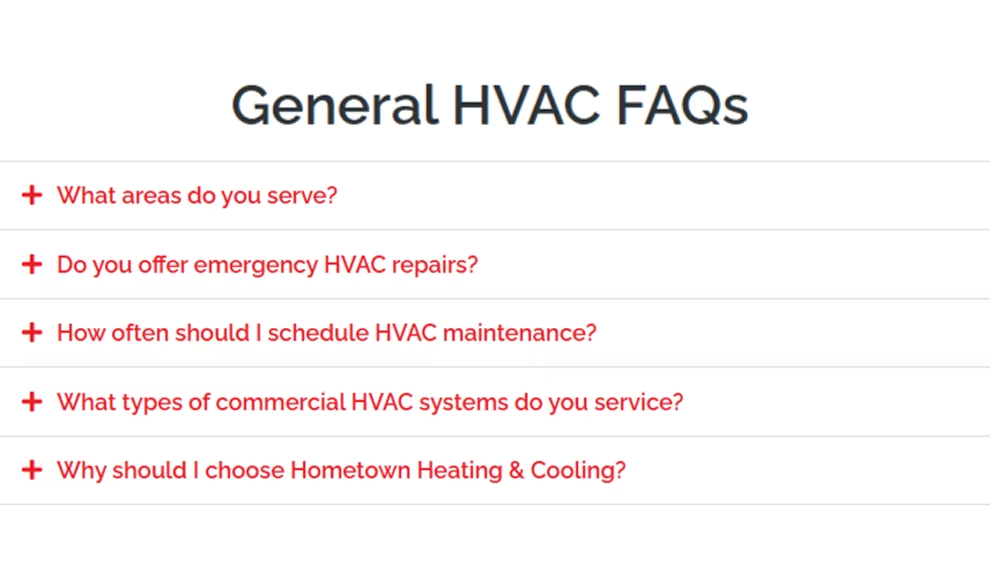
Bonus Tip: One of the best sources for voice-style questions is your own sales calls and inbox messages!
My team always asks clients, “What did you search before you found us?” The answers are gold.
Want to see how voice search fits into a fully booked schedule? Check out my ultimate guide to SEO for home remodelers.
3. Optimize for Question-Based Queries
This is what my team and I focus on when figuring out how to optimize for voice searches.
Local, question-style searches are huge. Nearly 58% of consumers use voice search to find local business information (hours, directions, phone numbers), as per PR News Wire.
And most of those voice queries are framed as questions:
- Who: “Who fixes leaking roofs near me?”
- What: “What does AC repair usually cost?”
- Where: “Where can I find a licensed electrician?”
- When / Why / How: pricing, timing, and problem-solving searches
When you structure pages to directly answer these question-based queries, voice assistants can extract your content instantly.
I like Toronto-Roofer's FAQ page. It covers the "How, what, who" questions we talked about and provides plain-English answers.

In the voice search world, this is what ultimately drives visibility, leads, and a stronger content marketing ROI.
4. Target Featured Snippets and Position Zero
Featured snippets are a HUGE part of voice search SEO.
What is a featured snippet?
A featured snippet is the short answer box that appears at the very top of Google. It pulls a quick summary from a website to directly answer a question.
I read a Forbes article recently that confirmed: 70% of voice searches pull from featured snippets and “People Also Ask.”
These featured snippets sit at "position zero" — above all regular search results. It's what mostly gets read out loud by voice search assistants.
Quick update though: In 2025–2026, Google is increasingly replacing traditional snippets with AI Overviews (you've probably already seen these):
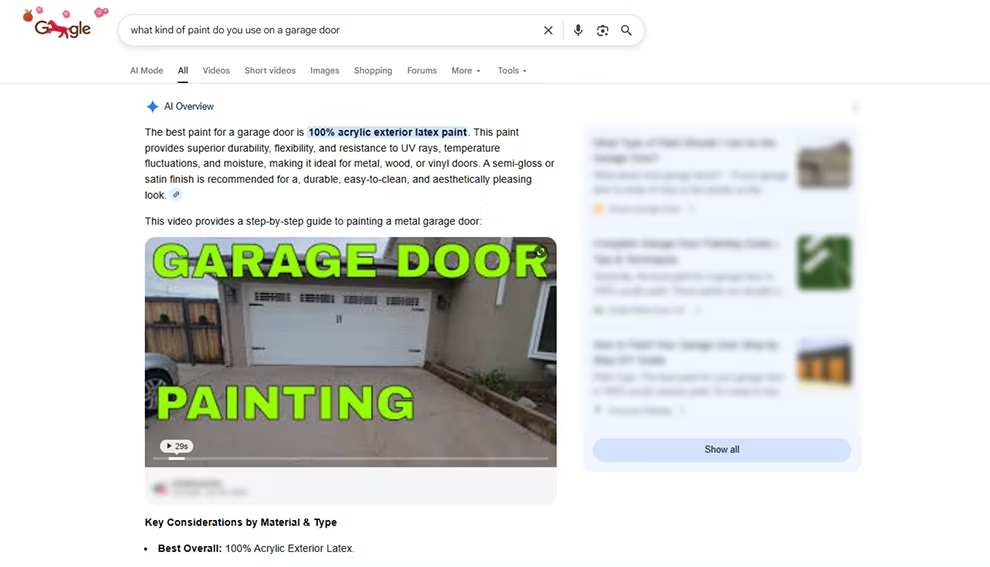
But both featured snippets and AI Overviews pull from trusted content. If you’re optimized for featured snippets, you’re already doing most of what AI Overviews want.
To see how traditional search is evolving into AI-driven results, read our breakdown of GEO vs SEO.
Here’s how my team and I format content to show up in these "position zero" boxes:
- Open with a direct 1–2 sentence answer
- Keep it around 40–60 words
- Use numbered steps or bullet lists
- Add clear definitions and FAQ sections
I'll say it a thousand times: Voice assistants don’t read full pages.
Format your content with tight, structured answers, and you dramatically increase your odds of being pulled into voice search results.
Stop letting local competitors outrank your multi-location brand in voice search. Check out my ultimate franchise SEO guide to dominate every location.
Too Busy to Do It Yourself?
Contact my team today. You'll see a huge uptick in leads, jobs, and revenue.
5. Improve Page Speed and Technical Performance

Voice assistants will skip you if you have a slow website.
But what qualifies as "slow"?
Backlinko analyzed 10,000 Google results pages and found the average voice search page loads in about 4.6 seconds! That's over 50% faster than the typical web page.
Page speed matters in your voice SEO strategy.
Not sure where you stand? Enter your URL into Google’s PageSpeed Insights, and see your page’s speed score, along with specific improvements you can make.
My team follows this quick checklist to optimize for speed and website performance:
- Keep images under 200 KB (use tools like TinyPNG to shrink file size without losing quality)
- Remove unused plugins/code
- Upgrade hosting and enable caching (WP Engine is a great hosting site, excellent for serious growth)
- Build for mobile-first, always (more on that below)
This tech stuff might seem nerdy, but trust me, it's super important to your voice search rankings.
6. Ensure Mobile-First Optimization
58% of voice searches happen on... you guessed, mobile!
Is your site optimized for smaller screens? Then your voice search visibility is at risk.
Google uses mobile-first indexing, meaning it evaluates your mobile experience before desktop.
SEO expert, Neil Patel, confirms this: "Mobile has been the main method of search starting with Google’s 2015 algorithm update coined 'Mobilegeddon.'"
Here's how to make your website mobile-friendly:
- Use a responsive design that adapts to any screen size (phones, tablets, desktops)
- Add big, readable text (at least 16px body font so users don’t have to zoom or squint)
- Leverage tap-friendly buttons and menus (easy to click with one finger)
- Ensure fast-loading mobile pages (aim for under 3 seconds)
- Remove intrusive popups (especially on mobile — they hurt rankings)
P.S. When you nail mobile, you don’t just dominate SEO for voice search, you also start ticking your Google rankings up!
Master the algorithm with my latest tips on how to rank higher on Google.
7. Use Structured Data and Schema Markup
You don't have to be a developer to do this.
Structured data (also called schema markup) gives search engines extra context about your pages. It's a code added to a webpage to help Google understand page content and context.
I like to think of it as adding "labels" to my content. That way, voice assistants can clearly tell the difference between my services, FAQs, location, and reviews.
It's so effective that over 45 million websites now use structured data.
To optimize for voice search, my team usually starts with:
- LocalBusiness schema – address, hours, and service area
- FAQ schema – fast answers for common customer questions
- Product or Service schema – pricing, offerings, and availability
- Review schema – social proof like reviews, awards, certifications
Thankfully, you don’t need to code this by hand. Most WordPress SEO plugins (like All in One SEO) let you add schema in a few clicks.
8. Optimize for Local Voice Search ("Near Me" Queries)
If you’re a local contractor, this one is important.
50% of voice searches have local intent: “near me,” “in [city],” “open now,” or “best roofer nearby.”
These are typically what we call "high-intent searches", i.e., searches from people in your area, ready to hire.
When my team optimizes for local voice visibility, we focus on two things:
- Location-based keywords (add your city and service across all key pages)
- Localized content (service-area pages, local FAQs, and neighborhood-specific examples)
For example, instead of just “roof repair,” we’ll build pages like “Emergency Roof Repair in Austin” or “HVAC Installation in Round Rock.”
With these "near me" queries, voice assistants care about 3 things:
- Proximity (using keywords like "furnace repair downtown Austin").
- Relevance (how well your services match the question — “emergency roof leak repair”).
- Trust (local business listing reviews, accurate business info, testimonials).
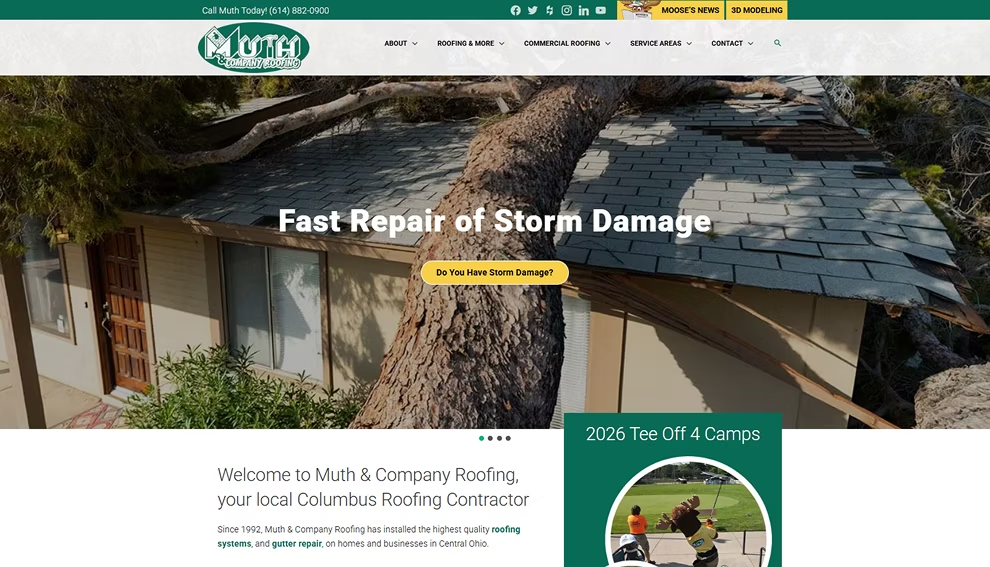
Muth Roofing does a fantastic job with their local SEO. They have dedicated location pages for proximity, and they nail down relevance with a great keyword in the header, "Fast Repair of Storm Damage."
9. Improve Your Google Business Profile for Voice Results

Speaking of local voice search, meet your strongest champion:
Your Google Business Profile.
A Google Business Profile is a FREE tool that allows businesses to manage their online presence across Google Search and Maps. It displays key information like your business hours, address, phone number, and website.
It usually pops up for location-based service queries like "roofing in Chicago."
A Reddit user reported that 60% of calls originate from their clients' GBP, even stating, "You're crazy to not have a Business Profile!"
Voice assistants pull heavily from business listings (especially your Google Business Profile) to decide who gets recommended:
- Make sure your name, address, phone, and hours are 100% accurate
- Pick the right primary and secondary categories (e.g., Roofing Contractor and Roof Repair)
- Add real job photos (No AI images. No stock images.)
- Write a clear service-focused description (mention your city and services)
- Build reviews steadily (aim to get at least 10 to 15 per month)
This is vital for your voice search visibility.
And after optimizing your GBP, I would also recommend expanding to other directories like Bing Places and Yelp to reinforce your voice SEO.
Check out my full breakdown on dominating SEO Near Me searches here.
Protect Your Pipeline in 2026
Most of your prospects are already using voice search. Do you show up? If not, you're missing high-paying jobs every single month. Let's fix this.
10. Optimize Content for Natural Language Processing
Voice search is fueled by conversational language.
I always tell clients: imagine explaining the problem to a neighbor. That’s your writing style!
AI doesn’t just scan keywords. It uses Natural Language Processing (NLP), which enables computers to understand, interpret, generate, and manipulate human language (both written and spoken).
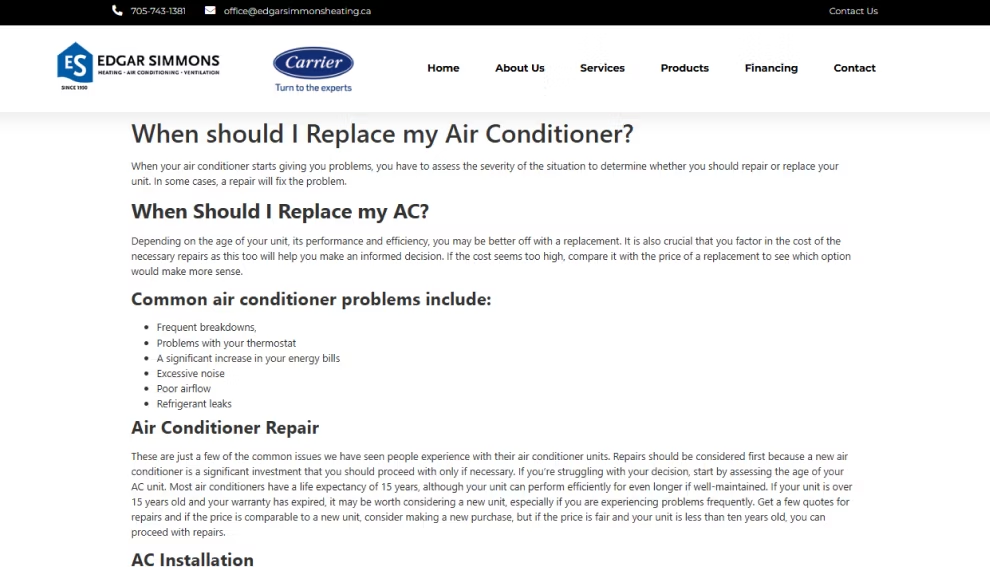
Want an example of great NLP optimization? I did a quick voice search, "When should I replace my AC?" Edgar Simmons pops up first.
I clicked on their site and saw strong FAQ-style content with clear, direct answers. They also added a bulleted list of common problems.
Voice search and AI love this type of "extractable" content!
How to optimize content for voice search:
- Use FAQ-styled content and answer questions directly
- Use short sentences and everyday words
- Break content into clear sections with headers and bullets
- Keep paragraphs tight (1–2 lines max)
- Include real-world examples (pricing, timelines, common problems)
Curious to know how to get AI to recommend your business? Check out my article!
How to Track Results With Voice Search Analytics
I don’t believe in guessing.
If we’re going to invest time in voice optimization, I want to see movement: more traffic, leads, booked jobs, and revenue.
That’s why voice search tracking is vital. Here are the key things I look at:
1. Track Long-Tail Keyword Performance
This is where all good voice search tracking begins.
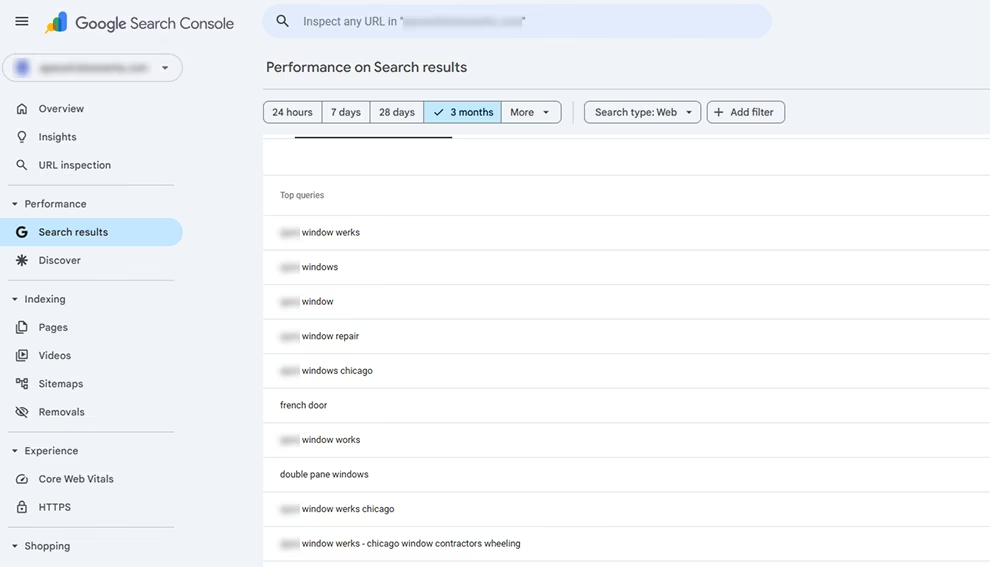
- Step 1: In Google Search Console, go to Performance > Search results.
- Step 2: Click + NEW at the top and select Query.
- Step 3: Change the dropdown from "Queries containing" to Custom (regex).
- Step 4: Use the following regex to find questions:
^(who|what|where|when|why|how|can|is|are|do|does)\b- Precision Tip: The ^ ensures the query starts with the question word, and \b ensures it matches the whole word.
Here’s what qualifies as long-tail keywords for voice search:
- 5+ words (“how much does AC repair cost”)
- Question starters (who, what, where, when, why, how)
- Location modifiers (“near me,” city names, neighborhoods)
- Natural phrasing (sounds like something you would actually say)
When I see these queries gaining impressions, that’s my cue to build new FAQs or service pages around them.
2. Measure Featured Snippet Visibility
You have to track featured snippets — AKA position zero.
This is often where voice assistants pull their answers from, so owning these spots directly impacts whether you get recommended.
I monitor this using SEMrush and Ahrefs. Here’s what I look at:
- Which keywords trigger featured snippets
- Whether my site owns them (or a competitor does)
- Gains or drops in snippet visibility over time
When I see a competitor holding position zero, that’s my cue to improve my answer format, tighten content, and track again.
3. Audit “Near Me” Search Rankings

For contractors, "near me" searches are some of the highest-intent queries you’ll get.
They’re a HUGE driver of voice search SEO.
When someone says, “Find me a roofer near me” or “Who is the best AC repairman in [city],” voice assistants pull from local rankings based on proximity, relevance, and trust.
I use BrightLocal’s Local Search Grid to see exactly where a business ranks across different neighborhoods or ZIP codes. It shows:
- Where you’re visible
- Where competitors are ranking higher
- Where you have ranking gaps (these are new keyword opportunities!)
Build location pages or local content to strengthen voice visibility. This is super important.
4. Keep an Eye on Mobile Traffic
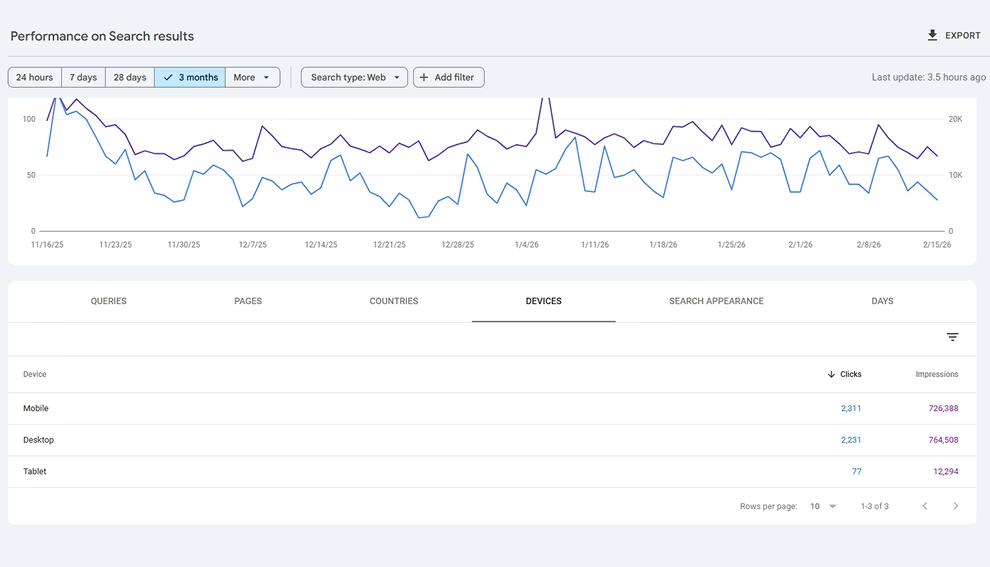
As I said, 58% of voice searches happen on phones.
If your mobile performance drops, your voice visibility will go with it.
That’s why I check voice search analytics inside Google Analytics 4.
In GA4, head to Reports → User → Tech → Tech details, then set the primary dimension to Device category to see whether your mobile traffic and engagement are trending. I pay close attention to:
- Mobile sessions and Key Events (conversions)
- Engagement Rate (GA4's primary metric for user interest, though you can manually add Bounce Rate to this report)
- Average engagement time
- Calls or form fills from mobile users
If the numbers slip, my team tightens mobile speed, improves tap-friendly buttons, and streamlines contact forms.
This type of strong mobile UX supports BOTH voice search visibility and traditional mobile SEO.
Book More Jobs. Optimize for Voice Assistants Today.
Let's recap:
Voice search optimization is the process of improving your website and content to get recommended by voice assistants like Siri, Google, and Alexa when qualified prospects ask for help.
Good news: You don’t need a massive budget to start!
Use simple strategies like FAQs, your Google Business Profile, faster mobile pages, and collecting reviews.
I’ve watched this work firsthand across 100+ contracting clients at my marketing agency, Comrade. When voice SEO is layered on top of strong local SEO, PPC, and web design... our clients see 400% more leads on avg. in the first 12 months.
Want to get high-paying jobs consistently? Book a free SEO consultation with my team.
FAQ
.png)
Ivan Vislavskiy is a business growth expert with 18 years of experience. He is also CEO of the award-winning Comrade Digital Marketing. Alongside his team, he’s transformed 300+ businesses across the U.S., with a special focus on the home services niche. His approach is ROI-driven, fully transparent, and built to drive real-world business outcomes.
Schedule a session and skyrocket your business today.


.svg)