
SEO vs PPC: Which is More Profitable in 2026?
The million-dollar question! I'll explain the difference between SEO and PPC, and where to invest to get clients faster.
Updated:
May 22, 2026
"Should I do SEO or PPC... or both?"
This is the #1 question my sales team gets every single day.
Their answer: SEO offers organic leads that compound over 6-12 months. PPC attracts leads immediately, but it can get very expensive.
So how do you choose? After all, you can't afford to do nothing.
Since 2008, my team and I have worked with over 300 home service businesses. In that time, we've run PPC campaigns and we've run SEO campaigns.
Today, I'll tell you what gave us the best results. You'll be able to optimize your returns on every dollar, get clients, and fill your dispatch board in 2026.
Key Takeaways
- SEO costs 5X less per lead than PPC, but takes 6 to 12 months to kick in. PPC works faster.
- Every dollar you spend on PPC vanishes the moment you stop. Every dollar into SEO compounds.
- Businesses spend $3,500 to 5,000+/month on SEO and $4,000–$10,000/month on PPC.
- AI and voice search tools now recommend local contractors. SEO gives you an edge with both.
- Use retargeting ads to capture lost website visitors. 70% of them are still within reach.
- Track SEO and PPC together to see your true ROI across both channels.
- Profitable campaigns use SEO and PPC. Figure out the "sweet spot" to ramp up your pipeline.
What Is Search Engine Optimization (SEO)?
Search engine optimization (SEO) is the process of optimizing your digital presence to rank higher on Google when local customers search for your services. The goal is to drive relevant, organic traffic directly to your business.
Is SEO still relevant in 2026? Absolutely! Statista reports that Google still gets 80 billion visitors every single month.
When a homeowner in your area Googles "emergency plumber near me" or "best HVAC company in Chicago," SEO determines who shows up.
What does it include? You must use the right keywords, optimize your Google Business Profile, create strong local content, earn positive reviews, and make sure your site is fast, mobile-friendly, and technically sound.
.avif)
With SEO, you do not pay for every click (unlike paid ads). Instead, SEO pulls in qualified leads consistently for a fraction of your PPC budget.
Most home service businesses invest between $3,500 and $5,000+ per month for quality SEO.
It typically takes 6 to 12 months to gain real traction, but once it does, the payoff is significant. Industry data shows that SEO delivers a 748% ROI on average, with a break-even point in as little as 5 to 6 months!
How SEO Quadrupled Leads for Cedar Rustic Fence
One of our top clients, Cedar Rustic Fence, came to us relying almost entirely on referrals. They had absolutely no digital strategy.
My team built out a proper website and SEO foundation, and in less than 12 months, Cedar saw a 306% increase in organic traffic, a 461% increase in qualified leads, and a 4,618% marketing ROI (meaning $46.18 back for every $1 invested).
That, my friends, is SEO at its finest.
SEO Gives You an Edge in AI and Voice Search
AI search is exploding in 2026.
Forbes reports that 60–65%+ of all Google searches now end without a click to any website. Makes sense! AI Overviews produce answers directly on the search results page.
That's not all. Millions of people now use AI tools like ChatGPT to ask questions like:

They're getting answers in a matter of seconds.
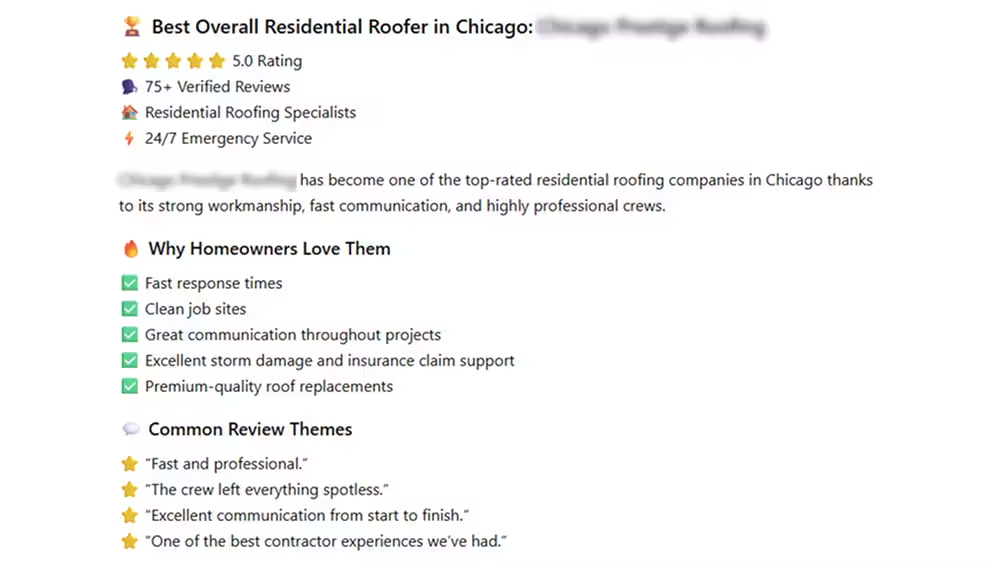
And voice search is growing, too. Roughly 76% of voice searches are "near me" queries. Homeowners are saying things like "Hey Siri, find an emergency plumber near me."
AI and voice search tools do NOT generate an answer out of thin air. They evaluate your content across multiple formats, crawl the web, look for high-authority pages, credible backlinks, technical structure, and consistent local signals.
But here's the good news: If you have a strong SEO foundation, you're ahead!
80% of AI recommendations are based on your existing SEO efforts. The other 20% comes from smart AI-specific optimizations that give you an edge.
As SEO guru Neil Patel says, "Strong SEO basics build the infrastructure that AI systems draw on when deciding what to cite."
How does SEO compare with AI search? Read my SEO vs GEO article to get your answer.
Start Your SEO Today. Surge Your Leads By 400%.
300+ clients are growing faster than they thought possible. It's your turn.

The 3 Critical Types of SEO
SEO isn't any one thing. In reality, there are 3 distinct disciplines working together.
Why am I telling you this? Because I've seen businesses invest thousands of dollars into just one of them, see no uptick in leads or traffic, and then label SEO as a "scam."
Trust me, you need all 3 in your search marketing strategy!
On-page SEO
On-page SEO is everything Google can see on your website.
Your service pages, blog posts, headings, keywords, and location-specific content all fall into this category.

Good on-page SEO helps get you to the top of the search engine results page.
Why is this important? Because the #1 organic search result on Google gets a 39.8% click-through rate. By position four, that drops to 7.4%.
Off-page SEO
Off-page SEO is your credibility outside your website.
Backlinks, consistent directory listings, Google Business Profile signals, and media mentions all send Google the same message... this business is legitimate.
On top of that, being on review sites like BBB and TrustPilot is a must. 97% of consumers read online reviews before hiring a local contractor.
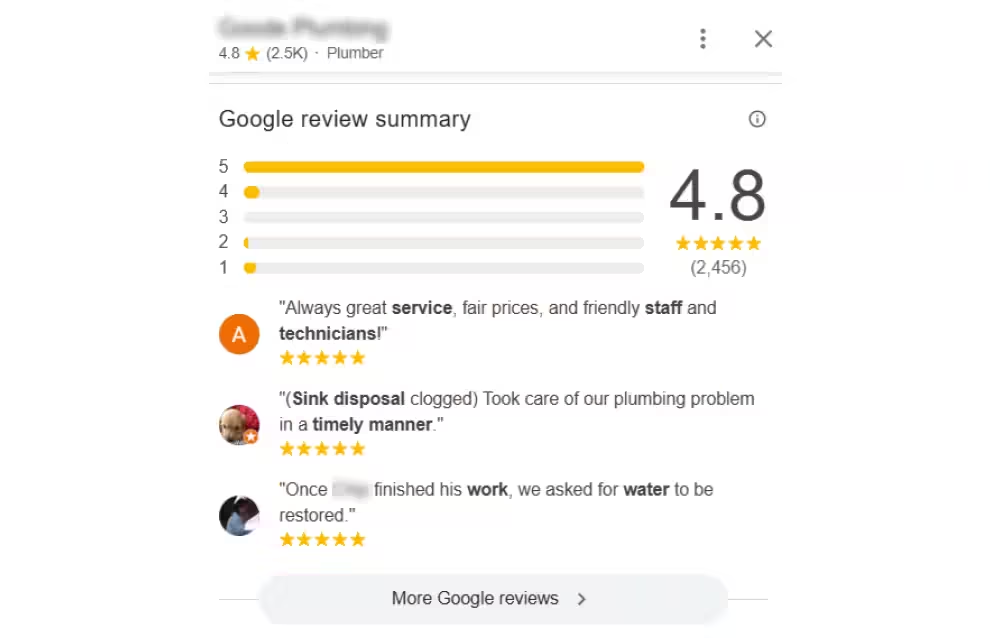
Every 5-star review your company earns actively works for your SEO rankings.
Technical SEO
I've seen technically broken websites cancel out months of great content work.
Technical SEO covers site speed, mobile performance, crawlability, site architecture, SSL security, structured data (schema markup), XML sitemaps, fixing broken links, eliminating duplicate content, and how cleanly Google can index every page on your site.
Check your site's mobile-friendliness on SERanking.
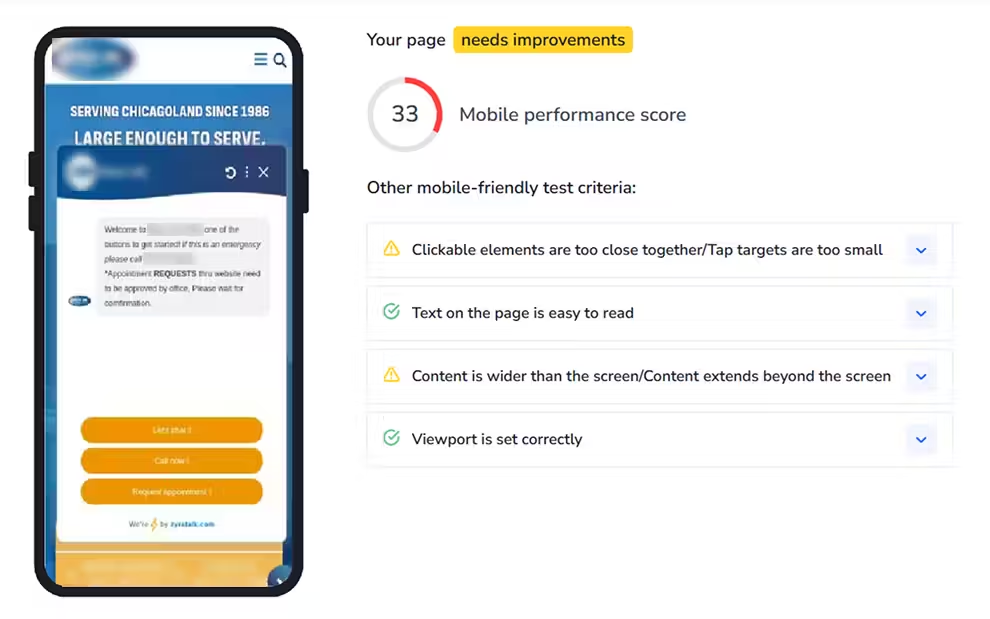
With over 60% of local searches happening on mobile devices, a slow or broken mobile experience must be fixed ASAP in your technical SEO efforts.
Content is a huge part of SEO. But is it worth the investment? Read my content marketing ROI guide today.
The Honest Pros and Cons of SEO
SEO is not perfect. Nothing in marketing is.
But I can tell you that the pros significantly outweigh the cons. Here's my honest breakdown:
Pros of SEO
It compounds over time. PPC stops the moment you stop paying. SEO keeps working. A well-optimized page for "roof replacement in Chicago" can generate leads for years without an additional dollar spent.
The ROI is hard to beat. SEO has a typical ROI of 748%. For context, that means for every $1 invested, businesses are getting $7.48 back. I've personally seen clients hit returns well beyond 1,000%.
It makes you credible by association. If you're sitting at the #1 organic spot on Google, that is instant credibility. Google itself is telling them you're the best answer.

It feeds AI search. As we covered above, ChatGPT, Perplexity, and Google AI Overviews pull recommendations from businesses with strong SEO foundations. Your organic rankings today are your AI visibility tomorrow.
Cons of SEO
It takes time. This is the big one. SEO typically takes 6 to 12 months before you see meaningful traction. If your pipeline is completely dry right now and you need leads this week, SEO alone won't save you.
It requires ongoing investment. SEO is not a one-time fix. Google's algorithm updates constantly, and what works today may need adjusting tomorrow. You need a team that stays on top of it.
It's competitive. In major metros, ranking for terms like "HVAC repair near me" is hard. Breaking through takes time, expertise, and money in the right SEO digital marketing strategy.
What Is Pay-Per-Click (PPC) Advertising?
Pay-per-click advertising (PPC) is an online ad model where advertisers pay a fee each time a user clicks their ad. Essentially, you are paying to buy targeted visits to a website or app rather than attempting to earn them organically.
You'll notice a "Sponsored" tag next to a PPC ad.

How does it work? You bid on keywords like "emergency plumber Chicago" or "roof replacement near me," and when a homeowner Googles that term, Google factors in your bid, ad quality, and landing page relevance to determine if your ad pops up.
But PPC can be expensive. Here are a few cost-per-click (CPC) benchmarks for the home service industry as of 2026.
That adds up fast. Take plumbing at $10.49 per click.
Let's say you spend $6,000 in a month, see ~570 clicks, ~50 leads, and you get 12 jobs.
Even at $1,000 per job, you only brought in $12,000 in revenue. After job costs, your actual profit margin on that ad spend is painfully thin.
The upside is how quickly PPC works. You could set up your campaign today, and your phone could ring... today! You won't have to wait 6 to 12 months like SEO.
Most home service businesses spend between $4,000 and $10,000 per month on PPC, depending on their market, competition, and the number of services they're targeting.
The typical PPC ROI is between 200% to 500%.
See How PPC Surged Qualified Leads by 245% for Kitchen Cabinet Guys
Kitchen Cabinet Guys, a family-owned cabinet company based in Chicago, came to us in 2023 with an underperforming PPC campaign, weak organic visibility, and an outdated website.
We rebuilt everything: a new website, stronger SEO, and a fully optimized PPC strategy with targeted keywords and better landing pages.
Success! KCG saw a 245% increase in qualified leads and a 1,082% marketing ROI. While this wasn't easy, given Chicago's competitive climate, it shows PPC and SEO's potential to significantly boost your leads.
PPC is a Risky Game. Turn to the Experts.
We optimize every dollar to give you the HIGHEST return on investment.
5 Critical Types of PPC Ads
PPC goes far beyond Google search ads.
There are 5 distinct paid search advertising formats, and a smart PPC strategy uses more than one. Here's what's available to you:
Search ads
Search ads are the gold standard for home service businesses. They appear at the very top of Google the moment someone searches "plumber near me" or "roofing company Chicago."
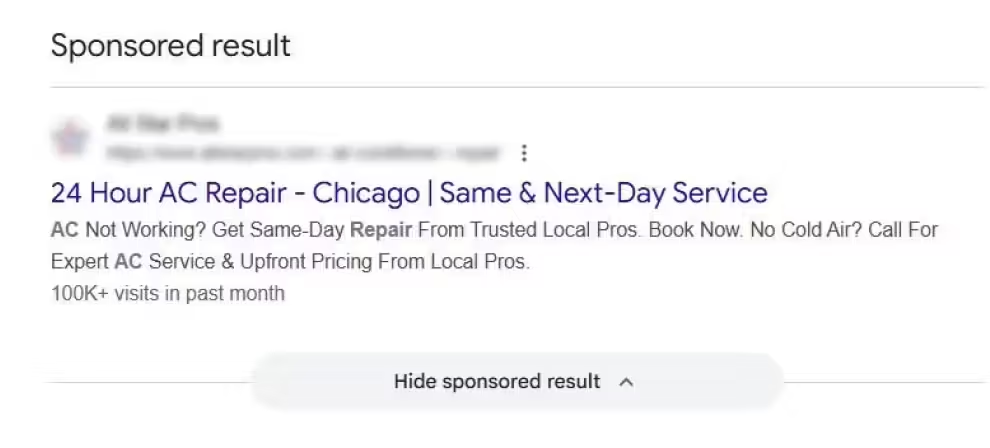
They attract homeowners at their highest point of intent. What do I mean by that? Well, if a pipe just burst, and they're ankle-deep in water, they're ready to hire.
For most contractors, this is where the majority of your PPC budget should go.
Display ads
Display ads are visual banner ads that follow homeowners around the web. You'll see them on news sites, blogs, and apps.
They won't generate the same immediate conversions as search ads, but they keep your brand visible while homeowners are in the research phase.
Social media ads
Facebook and Instagram let you get incredibly specific to target homeowners by zip code, household income, and even life events like "recently moved."
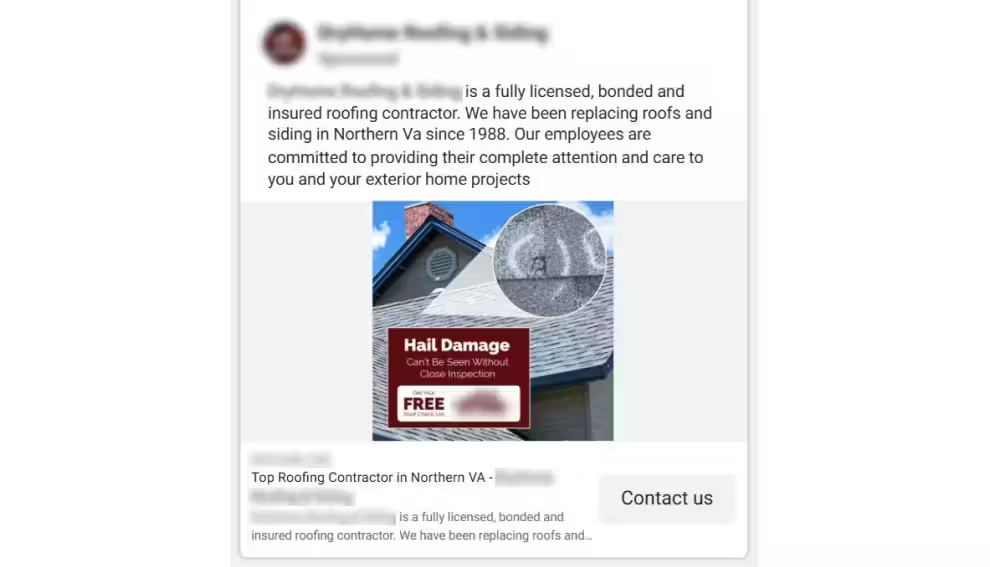
For landscaping companies, remodelers, and home builders, social ads can be a powerful way to generate demand before a homeowner hits Google.
Retargeting ads
Retargeted website visitors are 70% more likely to convert than visitors who are not exposed to retargeting campaigns.
These ads follow people who visited your site but didn't convert. Think of them as warm leads.
They'll encounter your ads on news sites, scrolling social media, and watching YouTube with something like: "Still thinking about that roof? Get a free estimate today."
Retargeting campaigns can also reduce your cost per acquisition by up to 50% compared to campaigns targeting cold audiences.
Video ads
Video ads run on YouTube, and the reach is staggering.
YouTube reaches 2.7 billion monthly users, and video ads deliver 109% higher ROI than linear TV.
For home service businesses, a 30-second before-and-after of a roof replacement or an ad placement on spotting electrical hazards is insanely effective.
You can achieve a very positive return on investment here.
The Honest Pros and Cons of PPC Ads
PPC isn't perfect. While it is effective, use it with caution.
Here's what you need to know going in:
Pros
Leads can start coming in today. A properly built PPC campaign can have your phone ringing within 24 to 48 hours. Be sure your intake team is ready!
You have intense control. Set a daily budget, choose your service area, pick your hours, and target only the homeowners most likely to call. SEO cannot offer that level of control.
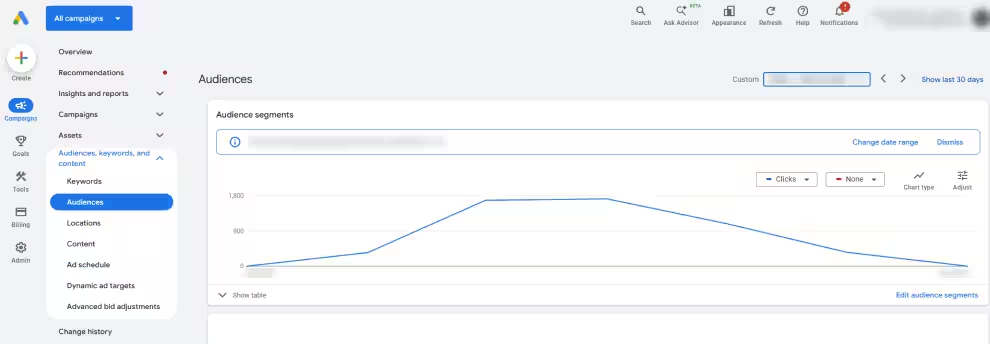
The data is crystal clear. Clicks, leads, cost per lead, and conversion data are all right there. It's very easy to see which ads convert and where visitors drop off.
Cons
It can get expensive fast. With average CPCs ranging from $5 to $15, a poorly managed campaign can drain thousands of dollars without generating a single booked job.
There's no equity being built. Every dollar you spend on PPC is gone the moment it's spent. Turn off the budget today, and your visibility drops like a rock.
It requires constant management. PPC is an attention hog. Your bids need adjusting, ad copy needs testing, and landing pages need optimizing consistently, every single week.
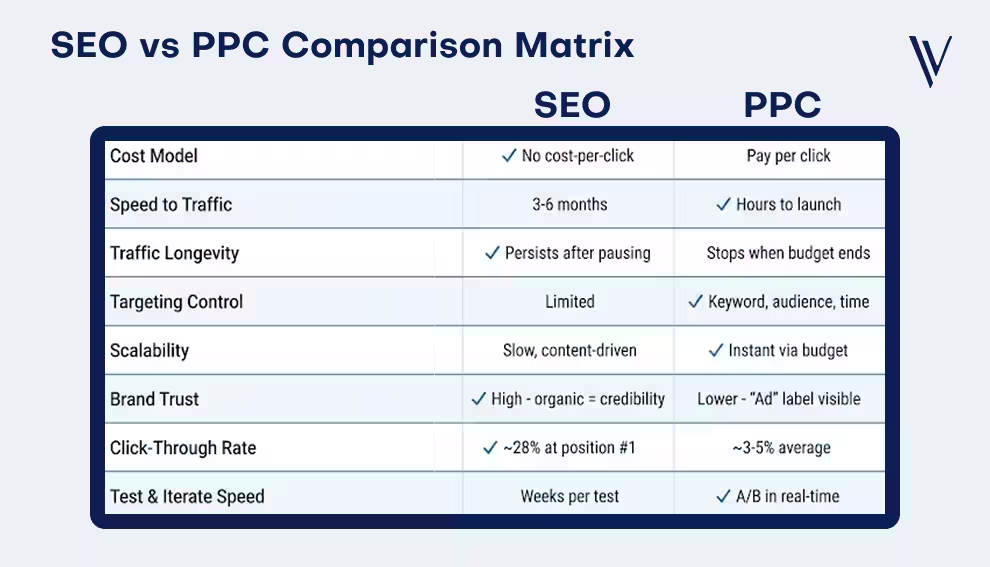
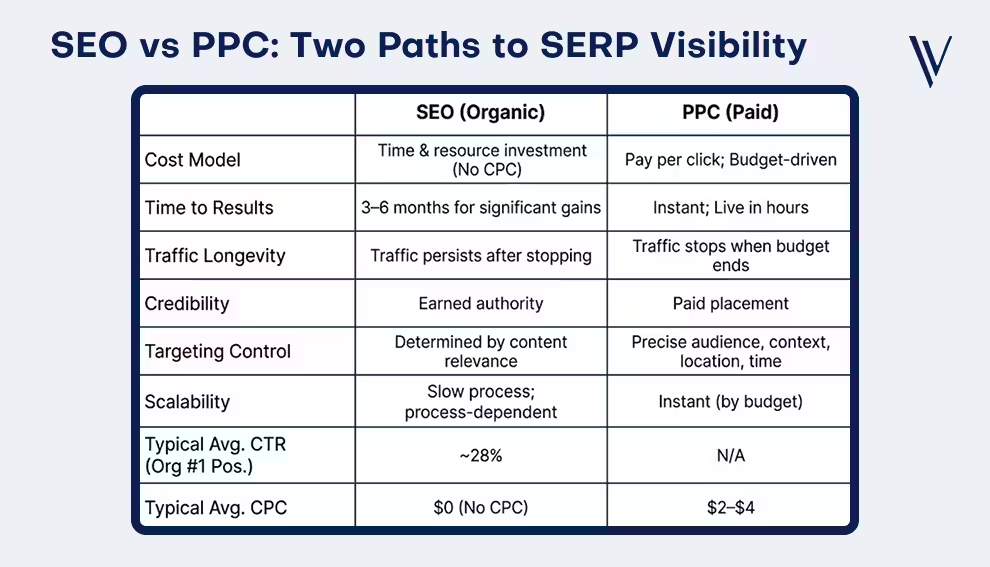
When to Use SEO vs PPC
Is combining SEO with PPC a good idea? The right answer has nothing to do with which strategy is "better."
It has everything to do with your timeline, budget, and what your business goals are at this exact moment.
The good news? You don't have to choose forever. You can start with one, build momentum, and then layer in the other.
When to Prioritize SEO
- Your business has been operating for at least 1 to 2 years and has a stable revenue base
- You're playing the long game and want leads that don't require ongoing ad spend
- You want to build a digital asset that compounds in value over time
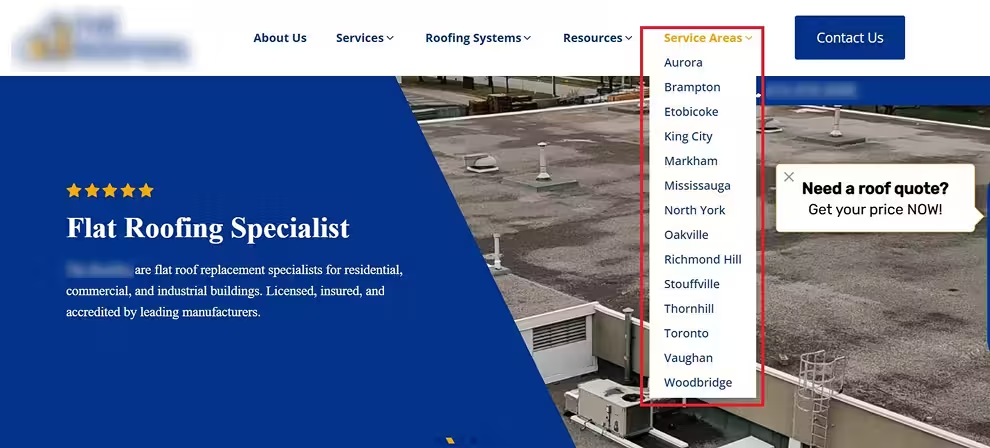
- You're targeting multiple service areas and want a page ranking for each one
- You want to show up in AI search tools like ChatGPT and Google AI Overviews
- Your competitors are already ranking organically, and you need to catch up
- You want to reduce your cost per lead over time, from $138 to as low as $15
When to Prioritize PPC
- Your pipeline is dry right now, and you need leads this week
- You're launching a new service, entering a new city, or opening a new location
- You have a seasonal surge coming (storm season for roofers, summer for HVAC), and you need to capitalize fast
- Your website is new and has zero organic authority to build from
- You want to test a new service area before committing to a full SEO strategy
- You need a predictable, controllable lead flow with a clear cost per lead
- You have the budget to sustain $4,000 to $10,000+ per month in ad spend
Both SEO and PPC have their place (sometimes at the same time with different budgets).
How to Find a Synergy Between SEO and PPC
The real money lies in between. You don't have to choose between SEO and PPC. Run both together and let them feed each other.
Use PPC Data to Supercharge Your SEO
Your PPC campaigns are a data goldmine. Every click, conversion, and keyword that drove a booked job is intel you can feed directly into your SEO strategy.
Instead of spending months optimizing pages around relevant keywords that might convert, PPC confirms within days which ones actually do!
Retarget Your Organic Visitors with PPC
SEO brings them in. PPC brings them back.
Your SEO is bringing in organic visitors who aren't ready to pick up that phone: they're researching, comparing, deciding.
Google ads retargeting follows them across the web with a targeted message until they're ready to call.
Dominate the Entire Search Engine Results Page
Imagine your business owns both the top paid ad and the #1 organic listing for a keyword like "HVAC repair near me." What happens next?
Your competitors get pushed down the page. Your brand appears twice before anyone else appears even once. That's power. And that's what SEO and PPC working together looks like.
No More Stressful Months. Get Clients Consistently and Predictably.
Don't wait until you urgently need jobs. Act today to fill your pipeline with SEO and PPC.
How to Calculate the Cost and Return of SEO vs. PPC
Let's talk money. Your ROI is ultimately what you care about. It all boils down to this!
What SEO Costs
With SEO, your budget doesn't go to Google; it goes toward the people and tools doing the work. That means content creation, technical optimization, link building, and SEO tools like Ahrefs or Semrush.
Most quality local SEO programs run $3,500 to $5,000 per month. You're building an asset that will pay you back for years down the line.
Calculate your SEO cost per lead:
SEO Cost Per Lead = Total Monthly SEO Investment ÷ Total Leads Generated
Example: $4,000 per month ÷ 80 leads = $50 per lead
What PPC Costs
PPC costs are more straightforward. You pay per click, set a daily budget, and track your cost per acquisition. This means you'll know exactly how much it costs you to land each new customer.
The control is amazing. The problem is that the moment you stop paying, everything stops.
Calculate your PPC cost per lead:
PPC Cost Per Lead = Total Ad Spend ÷ Total Leads Generated
Example: $5,000 ad spend ÷ 30 leads = $167 per lead
Curious to see the true returns on your PPC? Read my PPC ROI article today.
The ROI Comparison
SEO has an average ROI of 748% while PPC has an average ROI of 200%.
And over a 3-year horizon, SEO can deliver up to 12 times the ROI of PPC.
Short-term, PPC converts slightly higher. But long-term, the compounding nature of organic traffic makes SEO one of the highest-return investments a home service business can make!
Use this formula for both channels:
Marketing ROI = (Revenue Generated − Marketing Cost) ÷ Marketing Cost × 100
Example: ($40,000 revenue − $4,000 SEO cost) ÷ $4,000 × 100 = 900% ROI
Turn to the SEO and PPC Experts to Boost Your Leads in 2026
I'll leave you with this. There's no clean answer between SEO and PPC.
Consider where your business is today and where you want it to be in 12 months.
Need leads this week? Start with PPC. Want something that generates leads consistently without paying for every click? Invest in SEO.
Since 2008, my team at Comrade has helped over 300 home service businesses navigate this decision. Our Revenue Engine unifies SEO, PPC, AI search optimization, and web design to 4X our clients' leads in the first 12 months, yielding an 820% ROI.
Come see what's possible for your business.
Book a free growth consultation. ($499 value. Free for a limited time.)
FAQs on SEO vs PPC
.png)
Ivan Vislavskiy is a business growth expert with 18 years of experience. He is also CEO of the award-winning Comrade Digital Marketing. Alongside his team, he’s transformed 300+ businesses across the U.S., with a special focus on the home services niche. His approach is ROI-driven, fully transparent, and built to drive real-world business outcomes.
Schedule a session and skyrocket your business today.

![GEO vs SEO: How to Double Your Profits in 2026 [Small Business Edition]](https://cdn.prod.website-files.com/673af32f3d0a33dd056406ce/693a63b8be62ea9d6e9bb15a_geo-vs-seo.avif)

.svg)