
Law Firm Marketing Statistics: Essential Data You Must Know In 2026
Crush the competition and attract more clients with our essential legal marketing stats.
Updated:
Aug 25, 2026
Law firm marketing statistics show that success relies heavily on both digital and traditional marketing channels. Legal marketing statistics indicate that firms must implement strategic marketing efforts to meet their business goals. The legal industry is quite competitive, with law firms mainly aiming to attract prospective clients and retain old ones. This is why legal marketing strategies must be implemented to meet the law firm’s business goals. From digital marketing efforts like social media and email marketing to offline strategies like print advertising and event sponsorships, there are many marketing tactics available to law firms. But how do you know the most effective ones and their level of effectiveness? It is through legal marketing statistics.
These numbers help most law firms increase clientele, expand their customer base, and beat out the competition while allowing them to tweak their efforts. This article explores some of the most noteworthy marketing statistics for lawyers.
Why Law Firm Marketing Statistics Matter for Your Practice
Legal marketing statistics refer to the data and trends related to law firms and legal professionals’ marketing strategies. These statistics illustrate how law firms reach potential clients, what strategies are most effective, and which areas of legal marketing need improvement.
This information is necessary for law firms to make informed decisions about including marketing in their average marketing budget and how to allocate those resources effectively. Without legal marketing statistics, law firms may be wasting money on ineffective marketing campaigns, missing out on potential new clients, and falling behind their competition.
Some common areas of focus for legal marketing statistics are:
- Referral sources: Data on where law firms are getting their clients, such as referrals from other professionals, word-of-mouth, or online sources.
- Digital marketing: Information on how legal firms use online marketing channels such as search engine optimization (SEO), pay-per-click (PPC) advertising, content marketing, social media, and email marketing to connect with clients and prospects.
- Website performance: Metrics related to law firm websites, such as website traffic, bounce rates, time on site, and conversion rates.
- Client behavior: Data on how clients search for legal services, what they seek in a law firm, and how they make their purchasing decisions.
- Marketing budgets: Information on how much law firms spend on marketing and how those budgets are allocated across different marketing channels.
- Industry trends: Insights into broader trends in the legal industry, such as changes in client behavior, new technologies, and regulatory developments.
General Legal Marketing Statistics
In 2026, some interesting law firm marketing statistics include:
- a three-year ROI on SEO of 526% for the average law firm

An ROI formula
- 96% of people seeking legal advice use a search engine
- 71% of law firms use social media for marketing purposes
- 65% of law firms spend most of their marketing budget online

- 89% of law firms believe that content marketing is either “very important” to their overall marketing strategy
- An average spend of $150,000 on SEO
- Only 24% of firms use video as part of their marketing
- 27% of firms with 10-49 lawyers use video as part of their marketing strategy
- Over 1/3 of potential clients starting their attorney search online

These statistics show that traditional or digital marketing is important for law firms looking to reach potential clients. Additionally, people use the Internet when looking for attorneys or seeking legal assistance or advice, highlighting that law firms need an effective digital and social media presence to be successful in today’s market.
Digital Marketing Statistics for Law Firms: Key Trends
These law firm marketing statistics provide critical data and insights about using digital marketing channels to promote legal services effectively. Digital marketing encompasses various tactics, including search engine optimization (SEO), pay-per-click (PPC) advertising, content marketing, social media marketing, email marketing, and more. Below are statistics that reflect the importance of digital marketing for lawyers.
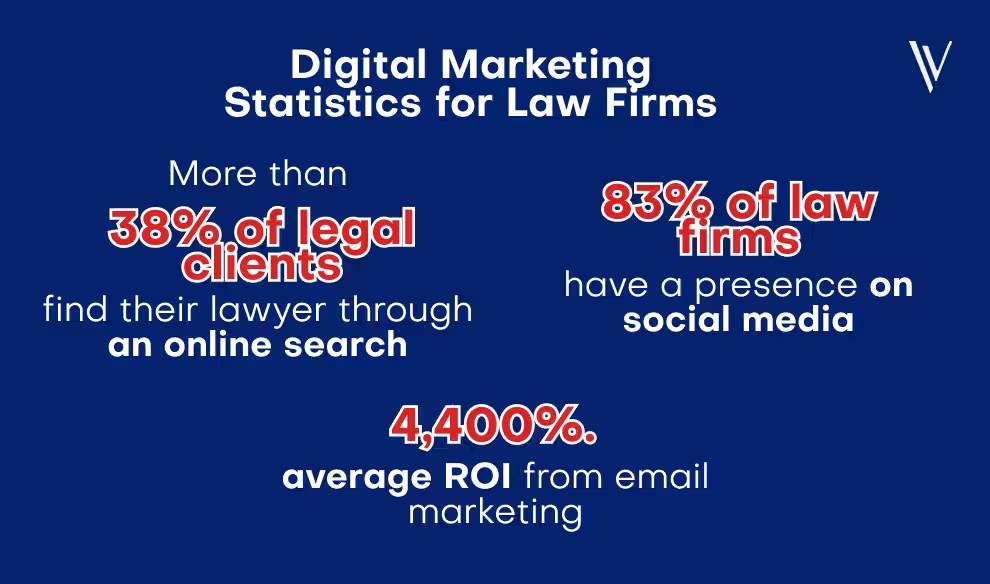
- More than 38% of legal clients find their lawyer through an online search. This highlights the importance of having a strong online presence for lawyers who want to attract potential clients. Thus, your law practice or law firm’s online presence and law firm websites should be optimized for search engines so that they rank highly in relevant search results.
- 83% of law firms have a presence on social media and use it to promote their brand and connect with their target audience, with LinkedIn being the most popular platform. Lawyers should use one or more social media platforms to target and engage with their audience.
- Email marketing has an average ROI of 4,400%. Lawyers can use the cost-effective way to create a targeted email list and then send out regular newsletters and updates to stay top-of-mind with their clients and prospects.
Law Firm Content Marketing Statistics
According to legal industry statistics, content marketing is a critical component of successful law firm marketing strategies.. It allows law firms to showcase their knowledge in their practice areas. There are different types of content: articles, podcasts, white papers, ebooks, videos, infographics, etc. The one a law firm incorporates into its content and marketing strategy depends on available resources. Content marketing statistics indicate the effectiveness of different types of content and how clients consume content.
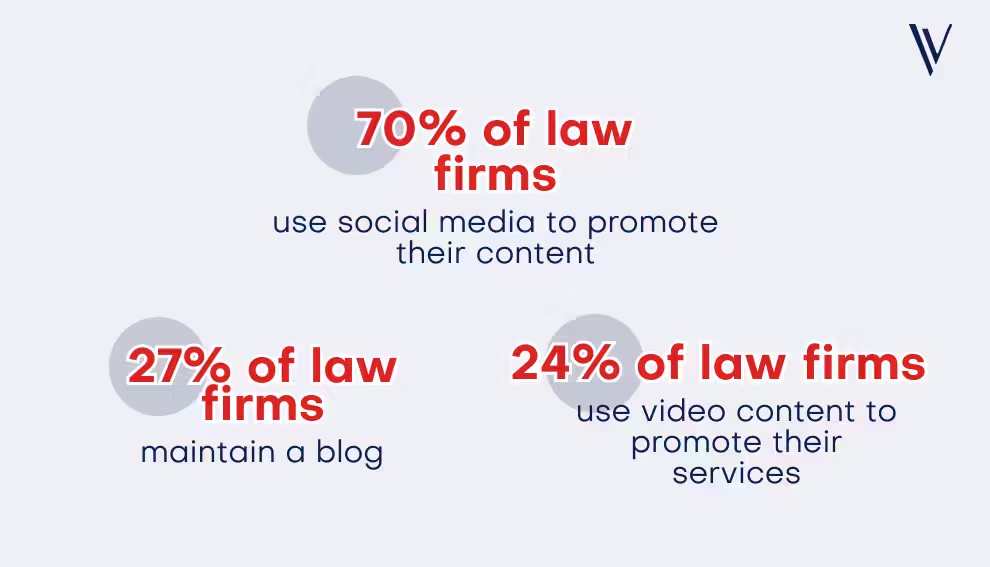
Social media is one of the most popular content marketing tactics law firms use, with 70% of surveyed law firms using social media to promote their content and engage with potential clients.
Blogging is another popular content marketing tactic used by law firms. Though 27% of law firms maintain a blog, it brings in 55% of their website visitors.
Video marketing is rising in the legal industry, with 24% of surveyed law firms using video content to promote their services and engage with their audience.
Social Media Marketing Statistics for Attorneys
Social media channels like Facebook, LinkedIn, Instagram, and Twitter make it easy for attorneys to instantly promote their law practice to billions of users. Social media marketing statistics explain how consumers use social media and what types of content are most effective for engaging with them. With these statistics in mind, lawyers can develop cost-effective social media strategies that help them reach a broader audience.
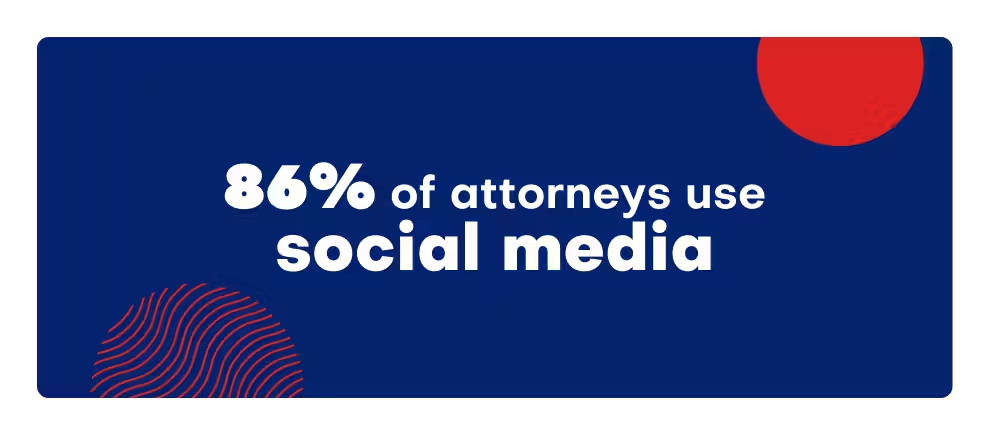
86% of attorneys use social media. LinkedIn is the most popular social media platform for attorneys, with 81% of attorneys using it for professional purposes. Facebook comes close in popularity, with around 70% of attorneys using it.
Video content on social media is also very important for law firms since it generates 1,200% more shares than text and images combined.
Email Marketing Statistics for Legal Services
Email marketing is another cost-effective marketing channel law firms can use. Law firms can email promotional messages, event schedules, or newsletters to a targeted audience.
Email marketing has a high return on investment (ROI) for law firms. It generates an average ROI of $42 for every $1 spent.
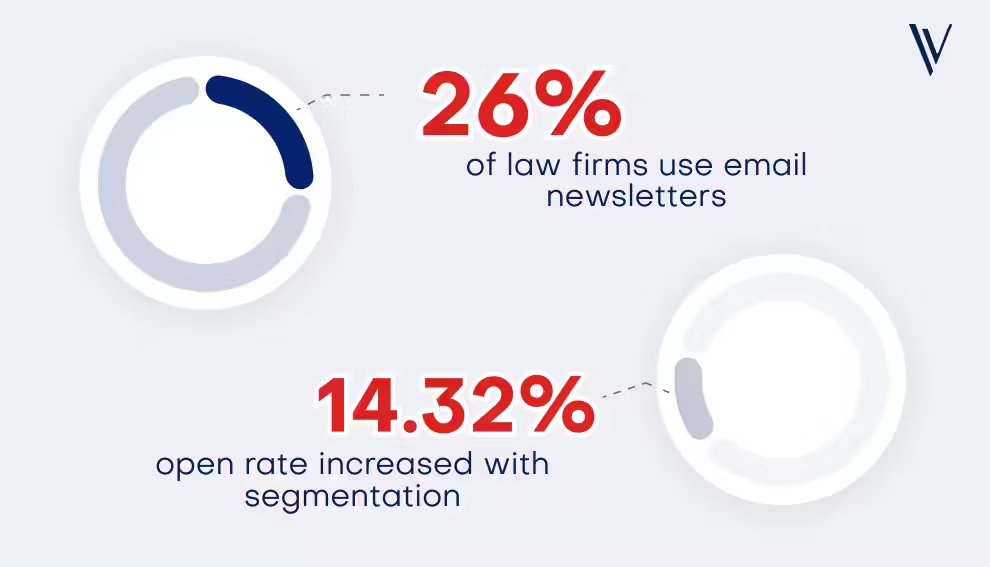
Furthermore, personalized emails have a higher open and click-through rate than non-personalized emails. Email subject lines also improve open rates. So, they should be short, descriptive, and include action-oriented verbs. 26% of law firms use email newsletters to stay in touch with clients and build relationships.
Segmented emails can increase open rates by 14.32%. Law firms should segment their email lists based on location, practice area, or client type to better target their audience with relevant content.
Offline Marketing Statistics for Law firms
We have discussed digital marketing in this article at large. However, offline marketing, such as billboards or print ads, is also necessary to reach potential clients. Some potential clients looking for an attorney used offline sources, such as print directories or word-of-mouth referrals, to find one.
81% of adults who read a newspaper take action due to print ads. Sponsoring events and organizations can help law firms build brand awareness and generate new business. Billboards can be a cost-effective way for law firms to reach a large audience. According to an Outdoor Advertising Association of America study, billboards have an average cost per thousand impressions (CPM) of $5.22, compared to $28.00 for television and $22.00 for newspapers.
What Are Some Surprising Legal Marketing Statistics?
The first one is about video marketing. 62% of law firms use video marketing to generate new business. Other statistics are:
- 84% of people trust online reviews as much as personal recommendations.
- Content marketing generates three times more leads than traditional marketing but costs 62% less.
- Legal clients found their lawyers online in 73% of cases, highlighting the value of digital marketing tactics.
- About 60% of traffic to legal websites comes from mobile devices. As a result, law firms must develop the appropriate digital marketing strategy that puts mobile first.
Conclusion
These comprehensive law firm marketing statistics and attorney marketing data provide valuable insights into various marketing channels and how lawyers and law firms can effectively use them to reach their goals. Law firms can improve their brand awareness, attract new clients, and ultimately grow their business by paying attention to these statistics and tailoring their marketing strategies accordingly.
.png)
Ivan Vislavskiy is a business growth expert with 18 years of experience. He is also CEO of the award-winning Comrade Digital Marketing. Alongside his team, he’s transformed 300+ businesses across the U.S., with a special focus on the home services niche. His approach is ROI-driven, fully transparent, and built to drive real-world business outcomes.
Schedule a session and skyrocket your business today.


.svg)